Revolutionary 'Curie' Microscope May Unlock Treatment for IBD
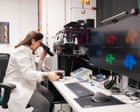
Revolutionary Microscopy Technology Offers New Hope for Inflammatory Bowel Disease
Scientists worldwide are celebrating the development of an extraordinary new microscope that promises to fundamentally transform our understanding of inflammatory bowel disease and related gastrointestinal conditions. This cutting-edge instrument, known as 'Curie,' operates at unprecedented magnification levels that far exceed traditional microscopy capabilities, offering researchers an unprecedented window into the mechanisms underlying these debilitating disorders.
The innovative inflammatory bowel disease microscope represents a quantum leap forward in diagnostic and research technology. Operating at 10 times the resolution of conventional microscopy systems, Curie enables scientists to visualize cellular structures and biological processes previously beyond the reach of standard equipment. This enhanced visualization capacity could prove instrumental in identifying the fundamental causes of conditions that have eluded researchers for decades.
Understanding the Scale of Inflammatory Bowel Disease
The global burden of inflammatory bowel disease continues to expand at an alarming rate, particularly among younger populations. According to the British Society of Gastroenterology, more than half a million individuals across the United Kingdom currently live with inflammatory bowel disease, representing a significant public health challenge that demands innovative solutions.
The two primary manifestations of inflammatory bowel disease are Crohn's disease and ulcerative colitis, both of which cause chronic inflammation throughout the digestive tract. These conditions impose profound quality-of-life limitations on patients, often requiring lifelong management and multiple pharmaceutical interventions. Despite considerable medical advances, no cure currently exists for either form of inflammatory bowel disease, making the search for underlying causative factors increasingly urgent.
How Advanced Microscopy Technology Works in Research
The Curie microscope's exceptional capabilities stem from its revolutionary optical design and sophisticated imaging technology. By magnifying cellular structures at 10 times the resolution of conventional microscopy equipment, this instrument allows researchers to observe molecular-level interactions that directly influence disease development and progression. Such detailed visualization enables scientists to identify abnormalities in cellular behavior, inflammatory response mechanisms, and tissue degradation processes that characterize inflammatory bowel disease.
This unprecedented magnification capacity opens entirely new research pathways. Scientists can now examine the intestinal epithelial barrier at molecular resolution, study immune cell interactions in unprecedented detail, and observe how microbial communities interact with host tissues. Each of these observations potentially holds the key to understanding why inflammatory bowel disease develops and how future treatments might intervene.
Implications for Treatment Development
Researchers worldwide recognize that discovering the root cause of inflammatory bowel disease represents the essential first step toward developing effective cures. The Curie microscope's advanced capabilities position it as a potentially transformative tool in this quest. By enabling detailed observation of disease mechanisms at the cellular and molecular levels, scientists can identify precise intervention points for therapeutic strategies.
The potential breakthroughs emerging from Curie-facilitated research could fundamentally reshape treatment approaches for inflammatory bowel disease. Rather than relying solely on immunosuppressive medications that manage symptoms without addressing underlying causes, future therapies might target the specific cellular dysfunction or microbial dysbiosis that initiates disease development. Such precision medicine approaches could offer patients far superior outcomes and potentially even permanent resolution of their conditions.
Global Research Momentum
The development of this extraordinary microscope reflects the international scientific community's commitment to addressing the inflammatory bowel disease crisis. Research teams across multiple countries are preparing to utilize Curie's capabilities to investigate various aspects of these conditions, from genetic predispositions to environmental triggers to immune system dysregulation.
As more researchers gain access to this advanced technology, the pace of discovery is expected to accelerate dramatically. The collaborative nature of modern medical research means that insights gained through Curie microscopy will be rapidly shared across the global scientific community, potentially triggering a cascade of discoveries that collectively transform our understanding of inflammatory bowel disease and related gastrointestinal disorders.
Looking Forward
While the Curie microscope itself represents a remarkable technological achievement, its true significance lies in the discoveries it will enable. The thousands of patients living with inflammatory bowel disease worldwide now have reason to hope that this instrument might finally reveal the fundamental causes of their conditions, paving the way toward genuinely curative treatments rather than perpetual symptom management.
The intersection of technological innovation and medical research demonstrates how scientific advances can directly impact human health and quality of life. As researchers begin their investigations using Curie's exceptional imaging capabilities, the global community watches with anticipation, hoping that this powerful tool will finally unlock the secrets of inflammatory bowel disease and deliver the breakthroughs patients have long awaited.