
France's Cooling Crisis Reshapes Political Debate Over Air Conditioning
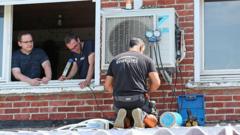
France Confronts Air Conditioning Dilemma Amid Record Temperatures
The persistent heat crisis unfolding across France has ignited an unexpected political confrontation regarding air conditioning adoption, forcing policymakers to reconsider decades-long resistance to widespread cooling systems. As temperatures reach unprecedented levels, the nation faces mounting pressure to reassess its traditional stance on air conditioning technology, creating significant divisions among political factions and environmental advocates.
For generations, air conditioning in France has been treated as a luxury rather than a necessity, with cultural attitudes and regulatory frameworks actively discouraging its installation in residential and commercial buildings. However, the escalating severity of heat waves has fundamentally altered this calculus, pushing governmental institutions and citizens alike to reevaluate whether sustainability concerns should yield to immediate health imperatives.
The Historical Context of French Air Conditioning Resistance
France's longstanding skepticism toward air conditioning reflects a broader European perspective that prioritizes energy efficiency and environmental conservation. Traditional building design in the country emphasizes natural ventilation, thick stone walls, and architectural features specifically engineered to maintain cooler interior temperatures without mechanical intervention. This philosophy became embedded in construction codes, rental agreements, and cultural norms.
Environmental advocates have consistently argued that widespread air conditioning adoption would significantly increase carbon emissions, strain electrical grids, and perpetuate dependency on fossil fuels. These concerns gained institutional weight through European Union climate directives and domestic environmental legislation that discouraged cooling system installations. The prevailing assumption held that proper urban planning, green infrastructure, and building retrofitting could adequately address temperature fluctuations.
How Record Heat Is Transforming Political Positions on Air Conditioning
The alignment between unprecedented temperature records and mounting public health emergencies has fundamentally shifted political dialogue. When France documented its hottest day on record, hospitals reported overwhelming numbers of heat-related injuries and complications, particularly among elderly populations and vulnerable demographic groups. This convergence of environmental data and human consequence has created political pressure that transcends traditional ideological boundaries.
Conservative politicians have seized upon the crisis to challenge environmental regulations they characterize as impractical and disconnected from citizen welfare. Meanwhile, progressive lawmakers find themselves navigating competing commitments to climate action and immediate public safety. Environmental organizations face internal debates about whether opposing air conditioning expansion remains ethically defensible when citizens face genuine health risks from extreme heat.
Public Health Implications Driving Policy Reconsideration
Medical professionals have become prominent voices in the air conditioning debate, documenting direct correlations between uncontrolled indoor temperatures and mortality rates. Emergency room admissions spike during heat events, and epidemiologists warn that climate projections indicate such extreme temperatures will become increasingly commonplace rather than exceptional occurrences. Healthcare systems already operating at capacity cannot accommodate sustained increases in heat-related casualties.
The vulnerability of France's aging population adds urgency to these health considerations. Retirement facilities and nursing homes report disproportionate impacts from excessive heat, with institutional administrators arguing that air conditioning represents essential infrastructure rather than optional amenity. These real-world consequences provide compelling testimony that transcends abstract environmental debates.
Economic and Environmental Trade-offs in Modern Context
The air conditioning controversy illustrates fundamental tensions between environmental protection and immediate human welfare. Energy consumption models suggest that widespread cooling system installation would increase electrical demand significantly, potentially requiring expanded power generation capacity. However, energy efficiency innovations have substantially improved cooling technology performance over recent decades, reducing the environmental footprint compared to older systems.
Renewable energy expansion across France has altered the environmental equation surrounding air conditioning. With increased solar and wind capacity coming online, the carbon intensity of electrical consumption has declined substantially, making previously untenable cooling options more environmentally justifiable. This technological and infrastructural evolution provides political space for policy shifts that seemed impossible just years earlier.
Future Regulatory Frameworks and Balanced Solutions
Forward-thinking policymakers are exploring intermediate approaches that acknowledge both climate imperatives and public health necessities. Building codes increasingly permit air conditioning in healthcare facilities, educational institutions, and commercial spaces while maintaining restrictions on residential installations. Selective deregulation targeting vulnerable populations represents a pragmatic compromise between competing policy objectives.
Investment in passive cooling technologies, improved insulation, and smart building management systems offers pathways to temperature control that minimize environmental impact. Urban cooling strategies involving increased tree canopy, reflective surfaces, and green infrastructure can reduce ambient temperatures and lower overall air conditioning demand. These integrated approaches appeal to stakeholders across the political spectrum.
The air conditioning debate ultimately reflects evolving understanding of climate adaptation requirements. Rather than viewing cooling systems as failures of environmental commitment, modern perspectives recognize them as necessary infrastructure within a warming climate context. Successfully navigating this transition requires policy frameworks that balance environmental stewardship with fundamental human welfare considerations.


