
Venezuela Earthquakes Kill 188 as Rescue Teams Search Rubble
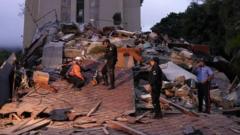
Devastating Venezuela Earthquakes Claim 188 Lives
Two consecutive Venezuela earthquakes, both measuring above 7.0 magnitude, have left at least 188 people dead and nearly 1,500 others injured in what authorities are calling one of the nation's worst natural disasters in recent memory. The shallow tremors struck within seconds of each other, causing catastrophic damage to infrastructure and leaving entire communities devastated across multiple regions of the country.
Scale and Impact of the Seismic Event
The Venezuela earthquakes occurred when residents had minimal warning, as the shallow depth of the quakes amplified their destructive force significantly. Emergency officials report that the combined impact of the two tremors, which struck in rapid succession, created compound damage patterns that challenged rescue and recovery efforts. The seismic activity was recorded across multiple monitoring stations, confirming the magnitude of each event exceeded initial assessments.
Preliminary damage assessments reveal that residential buildings, hospitals, schools, and critical infrastructure suffered severe structural compromises. In several municipalities, entire blocks of housing have been rendered uninhabitable, displacing hundreds of families from their homes and creating an urgent humanitarian crisis requiring immediate international assistance.
Rescue and Recovery Efforts Underway
Search and rescue teams have mobilized across affected areas, working tirelessly to locate survivors trapped beneath collapsed structures. Using specialized equipment and trained personnel, rescue workers continue sifting through rubble throughout affected neighborhoods and municipalities. The scale of the Venezuela earthquakes has strained local resources, necessitating coordination between national agencies and international rescue organizations.
Medical facilities throughout the region are overwhelmed with injured patients requiring emergency treatment. The nearly 1,500 casualties reported reflect injuries ranging from minor fractures to critical conditions requiring specialized surgical intervention. Healthcare workers have established emergency triage centers to manage patient flow and allocate limited medical resources effectively.
Structural Damage and Urban Impact
The Venezuela earthquakes caused widespread destruction to the built environment, with particular damage concentrated in densely populated urban centers. Schools have been closed indefinitely, government buildings have sustained significant damage, and transportation networks including roads and bridges require extensive repairs. Water supply systems and electrical infrastructure have been compromised, creating secondary challenges for survivors attempting to access clean water and power.
Engineers are conducting structural assessments to determine which buildings can be salvaged and which require complete reconstruction. The economic implications of the Venezuela earthquakes extend beyond immediate repairs, affecting employment, commerce, and public services across impacted regions for months ahead.
International Response and Support
The international community has responded to the Venezuela earthquakes crisis with offers of humanitarian aid, medical supplies, and technical expertise. Neighboring countries and global organizations are coordinating disaster relief efforts to support Venezuelan authorities in managing the emergency response phase and transitioning toward recovery.
Government officials have declared a state of emergency across all affected provinces, facilitating rapid deployment of resources and streamlining response protocols. The declaration enables authorities to access emergency reserves and expedite reconstruction planning for the most severely damaged areas impacted by the Venezuela earthquakes.
Seismic Experts Analyze the Events
Geological surveys indicate that the Venezuela earthquakes resulted from tectonic activity along major fault lines in the region. The shallow depth—a critical factor in determining surface damage intensity—meant that energy released from the tremors transferred efficiently to surface structures rather than dissipating deeper in the earth's crust.
Scientists note that the occurrence of two significant earthquakes in such close succession is relatively uncommon, suggesting complex tectonic interactions beneath the affected region. Aftershock activity continues, and authorities have warned residents to remain vigilant and prepared for additional seismic events in coming weeks.
Looking Forward: Recovery and Rebuilding
As search and rescue operations continue, attention is shifting toward long-term recovery planning. The Venezuela earthquakes have highlighted infrastructure vulnerabilities and the critical need for updated building codes and seismic preparedness programs. Reconstruction efforts will require substantial financial investment and sustained commitment from both domestic authorities and international partners supporting recovery initiatives.


