
Longest Flights Ever: Airlines Push 20-Hour Non-Stop Routes
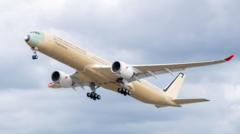
The Future of Ultra-Long Aviation: Breaking Distance Records
The aviation industry is witnessing a transformative shift as carriers develop increasingly ambitious longest flights that push beyond traditional boundaries. One of the most notable developments centers on establishing non-stop service spanning more than 20 hours, with industry experts pointing to routes like London to Sydney as game-changing operations that could reshape international travel patterns.
Understanding the 20-Hour Flight Challenge
Accomplishing longest flights of this magnitude represents far more than simply keeping an aircraft aloft for extended periods. Airlines must address multiple interconnected challenges spanning fuel capacity, crew regulations, passenger comfort, and aircraft engineering. The London to Sydney route, spanning approximately 17,000 kilometers, exemplifies the type of ultra-long distance aviation that carriers are now seriously considering.
Industry analysts emphasize that achieving consistent non-stop service on such routes requires technological breakthroughs. Modern aircraft, including the Airbus A350 and Boeing 787 Dreamliner, provide the foundation for these ambitious plans, yet engineers continue refining systems to support the demanding operational requirements inherent in longest flights.
The London Sydney Flight: Industry Game-Changer
The potential establishment of direct London to Sydney flights would mark a watershed moment in commercial aviation. Currently, passengers traveling between these major cities face minimum 17-hour journeys with at least one connection. A genuine non-stop option would eliminate layovers, reducing total travel time significantly and transforming passenger experience fundamentally.
Several airlines have publicly stated their intentions to launch such service. The technical feasibility now exists, with modern wide-body aircraft equipped to handle fuel requirements and operational demands. However, questions persist regarding commercial viability and passenger willingness to remain seated for 20-plus consecutive hours.
Passenger Comfort and Health Considerations
Experts acknowledge that extended flight durations present legitimate health and comfort concerns. Prolonged immobility increases deep vein thrombosis risks, while fatigue becomes increasingly problematic for both passengers and crew members. Airlines planning ultra-long distance aviation initiatives are implementing innovative solutions including enhanced cabin pressure systems, improved seating configurations, and onboard wellness programs.
The cabin environment itself represents critical innovation territory. Enhanced lighting systems mimicking natural circadian rhythms, improved air filtration, and humidity controls aim to mitigate physiological challenges associated with extended flight exposure. Premium cabin sections on planned longest flights will likely feature lie-flat seating, shower facilities, and comprehensive meal services previously unavailable on standard long-haul operations.
Crew Regulations and Operational Constraints
International aviation authority regulations impose mandatory rest requirements and duty-time limitations for flight crews. Operating 20-hour flights necessitates careful planning around these safety protocols. Airlines must employ crew scheduling that permits adequate rest periods despite the aircraft remaining in continuous operation. Some proposed solutions include expanded crew configurations or sophisticated roster management systems ensuring compliance while maintaining service quality.
Market Demand and Commercial Feasibility
Critical questions remain regarding passenger demand for ultra-long distance aviation options. Would travelers accept 20+ hours aboard an aircraft to eliminate layovers? Market research suggests divided opinion. Business travelers express enthusiasm for uninterrupted service, while leisure passengers demonstrate more hesitation regarding extended flight duration.
Ticket pricing represents another crucial consideration. Ultra-long distance flights require significant operational investment and fuel expenditure. Airlines must determine whether premium pricing supports demand, or whether competitive pressure demands more modest price points despite elevated costs. Early market analysis suggests viable demand exists among premium cabin passengers, though economy-class viability remains uncertain.
Technological Innovations Supporting Longest Flights
Advanced aircraft design continues enabling increasingly ambitious operational goals. The Airbus A350-900 ULR (Ultra-Long Range) variant, specifically developed for extended-range operations, demonstrates how engineering directly supports industry aspirations. Boeing's 777-8X variants similarly promise enhanced range and efficiency capabilities essential for longest flights.
Fuel efficiency improvements through lighter composite materials, advanced aerodynamics, and optimized engine performance directly enable longer non-stop routes. Real-time weather routing systems and improved navigation technology minimize fuel consumption while maximizing safety, further supporting viability of 20-plus hour operations.
Looking Forward: The Evolution of Ultra-Long Aviation
Industry forecasts suggest that longest flights exceeding 20 hours will become increasingly common throughout the 2030s. Airlines worldwide are evaluating route possibilities previously deemed operationally impractical. Beyond London-Sydney, potential new routes connecting distant metropolitan centers could include Melbourne-London, Dubai-Los Angeles, and Singapore-London alternatives.
The fundamental question remains whether passenger demand matches operational capability. Analysts project that premium cabin offerings will sustain initial viability, gradually expanding to include more economy options as aircraft efficiency improves and operational experience grows. Consumer preferences will ultimately determine whether ultra-long distance aviation becomes standard practice or remains a specialized niche offering for time-conscious premium travelers.


