
England Faces Historic Drought as Two-Thirds Region Now Affected
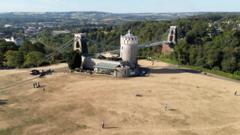
England Confronts Unprecedented Drought Conditions Across Vast Territory
A significant portion of England has officially entered drought status, with the environmental crisis now affecting more than two-thirds of the nation's territory. This escalating England drought situation represents one of the most serious water security challenges in recent years, prompting immediate intervention from water authorities and environmental agencies across multiple regions.
The declaration marks a critical turning point in the country's approach to water management and climate resilience. Authorities have confirmed that numerous areas previously considered water-secure have now transitioned into official drought conditions, necessitating the implementation of emergency protocols and conservation measures.
Regions Officially Declared Under Drought Status
Several major regions across England have now been formally designated as drought zones, triggering stringent water management protocols. The East Midlands region, encompassing vast agricultural and industrial sectors, has moved into this critical status, along with the neighboring counties of Lincolnshire and Northamptonshire.
Simultaneously, southeastern territories have also entered drought conditions. Kent and East Sussex, regions that traditionally benefit from relative water abundance, now face unprecedented restrictions on water usage. Additionally, the Solent area and the South Downs have received formal drought declarations, extending the affected zone across England's southern territories.
Impact on the East Midlands and Eastern England
The East Midlands drought declaration carries significant implications for agriculture, industry, and residential communities across the region. Lincolnshire, known for intensive agricultural production, faces particular challenges as farmers confront restrictions on irrigation and livestock watering. Northamptonshire, hosting both agricultural and manufacturing operations, must now implement comprehensive water conservation strategies across all sectors.
Southeast England Under Water Pressure
The southeastern drought declarations affecting Kent, East Sussex, the Solent, and the South Downs regions represent an expansion of the crisis into traditionally water-abundant territories. These areas, which supply water to millions of residents and support significant economic activity, now operate under emergency protocols designed to preserve remaining water reserves for essential purposes.
Implications of England Drought Status Declaration
The official designation of England drought conditions across such extensive territory triggers multiple consequences for residents, businesses, and environmental systems. Water companies implement tiered restrictions, beginning with public education campaigns and progressing toward mandatory usage limitations. Agricultural operations face constraints on irrigation, potentially affecting crop yields and livestock management practices throughout affected regions.
Industrial facilities dependent on water for cooling and processing operations must modify production schedules or seek alternative water sources. Construction projects may experience delays as water demands for dust suppression and site operations become restricted. Environmental concerns intensify as reduced water flows affect river ecosystems, fish populations, and wetland habitats across the drought-declared areas.
Water Management Strategies and Conservation Measures
In response to the England drought status declarations, water authorities have activated emergency management protocols. These include enhanced monitoring of groundwater levels and surface water availability, coordinated responses across regional water companies, and communication strategies to encourage public participation in conservation efforts.
Residents receive guidance on reducing domestic water consumption through behavioral modifications and infrastructure improvements. Businesses undergo assessment of water usage patterns and implementation of efficiency technologies. Agricultural operators explore drought-resistant crop varieties and modified irrigation techniques suitable for reduced water availability conditions.
Climate Context and Weather Patterns
The widespread England drought status reflects broader climatic patterns affecting precipitation and water availability. Extended periods of below-average rainfall, combined with increased temperatures accelerating evaporation rates, have depleted groundwater reserves and surface water sources across the affected regions.
The drought situation develops within the context of longer-term climate change impacts on England's water security. Scientists and environmental experts emphasize that such drought declarations may become increasingly frequent without comprehensive strategies addressing water infrastructure, demand management, and climate adaptation across the nation.
Future Outlook and Recovery Prospects
Resolution of the England drought status depends primarily on precipitation patterns returning to normal or above-average levels during critical seasons. Weather forecasts and hydrological assessments guide official projections regarding drought duration and recovery timelines. Authorities continuously monitor atmospheric conditions and groundwater trends to determine when drought conditions may be lifted across affected regions.
The current crisis underscores the importance of long-term water infrastructure investment, demand management policies, and climate adaptation strategies for ensuring England's future water security across all regions and sectors.


