
Can AI Transform Stanford's Future or Threaten Its Legacy?
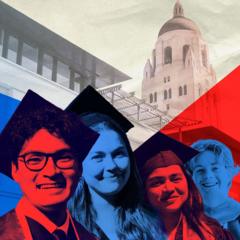
Stanford Graduates Weigh In on Artificial Intelligence's Impact
Stanford University has long been regarded as one of the world's most prestigious institutions, attracting top talent from across the globe. Yet as artificial intelligence continues to reshape industries and society, Stanford graduates are grappling with fundamental questions about whether AI represents an unprecedented opportunity or a significant threat to their educational investment and professional futures.
In recent discussions, current and former Stanford students have opened up about their genuine concerns and cautious optimism regarding artificial intelligence. Their insights reveal a complex picture that extends far beyond simple technological adoption, touching on deeper questions about the value of elite education in an AI-driven economy.
The Double-Edged Sword of Technological Innovation
For many Stanford alumni, artificial intelligence presents a paradox. The university's reputation has been built on innovation and forward-thinking education, positioning graduates to lead technological advancement. However, the rapid development and deployment of AI systems raises uncomfortable questions about whether the skills taught today will remain relevant tomorrow.
Several graduates expressed concerns that AI could automate roles traditionally filled by Stanford-educated professionals. Fields like finance, law, and management consulting—sectors that have historically absorbed large numbers of Stanford graduates—face significant disruption from intelligent systems. This uncertainty has prompted many students to reconsider their career trajectories and skill development strategies during their time at the institution.
Educational Value in an AI-Enhanced World
Despite these apprehensions, Stanford graduates recognize that artificial intelligence also creates new opportunities for those equipped to work alongside these technologies. Rather than viewing AI as purely disruptive, many see it as a tool that could amplify human capabilities and create entirely new professional categories.
The university's position in Silicon Valley and its strong computer science programs have historically given graduates advantages in emerging tech fields. This geographical and academic positioning could prove invaluable as organizations worldwide seek talent capable of developing, implementing, and managing AI systems responsibly.
Adapting Skills for the AI-Driven Economy
Stanford graduates emphasize that success in an AI-influenced future requires adaptability and continuous learning. Technical skills remain important, but increasingly, the ability to work effectively with artificial intelligence systems—understanding their capabilities, limitations, and ethical implications—has become essential across disciplines.
Many recent graduates reported that their Stanford education provided strong foundational knowledge but acknowledged that staying current with artificial intelligence developments requires proactive effort beyond their degree programs. This observation suggests that educational institutions must evolve their curricula to maintain relevance in rapidly changing technological landscapes.
Ethical Considerations and Responsible AI Development
Beyond career concerns, Stanford alumni discussed the broader societal implications of artificial intelligence expansion. Several graduates emphasized that their elite education carries responsibility to influence how AI systems are developed and deployed ethically.
The discussions revealed that Stanford-educated professionals feel positioned to contribute meaningfully to important conversations about AI governance, safety, and societal impact. This sense of responsibility reflects the institution's emphasis on educating leaders who can address complex global challenges.
Looking Forward: Opportunity Within Uncertainty
When asked directly whether Stanford remains their golden ticket in an age of artificial intelligence, graduates offered nuanced perspectives. Most believe that while the value proposition may shift, the university's resources, networks, and culture of innovation continue to provide meaningful advantages.
However, this confidence comes with important caveats. Graduates stressed that the Stanford degree alone may not guarantee career security in an AI-transformed economy. Instead, the institution's real value lies in teaching students how to learn, think critically, and adapt—capabilities essential for navigating technological change regardless of which direction AI development takes.
Conclusion: Navigating Uncertainty Together
The perspectives shared by Stanford University graduates reflect broader anxieties and opportunities permeating higher education globally. While artificial intelligence poses legitimate questions about traditional career paths and educational models, it simultaneously creates unprecedented possibilities for those prepared to engage with these transformative technologies thoughtfully and ethically.


