Burnham's Makerfield Victory: Labour's Path Beyond Leadership Change

Burnham's Decisive Victory Signals Labour's Leadership Transformation
The Makerfield byelection represents a watershed moment for Labour leadership change, demonstrating that the party can successfully counter the rising tide of populist movements. Andy Burnham's commanding performance against Reform UK's candidate marks a significant turning point in British politics. The former Greater Manchester mayor secured 55% of the vote compared to his rightwing challenger's 35%, establishing himself as a formidable political force capable of mobilizing traditional Labour constituencies and younger voters seeking genuine transformation.
Burnham's ability to reframe Labour's electoral proposition proved decisive in Makerfield. Rather than defending the incumbent administration, he positioned the party as an instrument for meaningful change. This strategic repositioning attracted voters fatigued by the current government's approach and searching for an alternative vision. The byelection outcome reveals a clear mandate for renewed Labour leadership that can articulate a coherent alternative to the status quo.
Understanding the True Drivers Behind Labour's Makerfield Success
The prime minister's assertion that Starmerism itself defeated Reform UK lacks credibility when scrutinized against electoral data. Polling conducted by Persuasion UK in Makerfield demonstrates that Labour's victory stemmed specifically from Burnham's personal political brand, his clear differentiation from current administration policies, and his articulation of left-leaning economic messaging. Voters responded not to incumbent claims but to the promise of tangible change represented by Burnham's candidacy and anti-Starmer positioning.
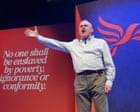
Burnham's victory rally address on Friday aligned closely with voter sentiments identified through rigorous polling. His rhetoric emphasized economic security achieved through visible state intervention and strategic economic management. This message resonated far more powerfully than abstract promises of continuity, indicating that electors actively seek governmental models emphasizing visible state action rather than market-driven approaches.
Beyond Rhetoric: The Challenge of Transforming Change Into Policy
While Burnham's electoral triumph is undeniable, his Labour leadership change agenda faces critical challenges in translating campaign rhetoric into substantive policy frameworks. His vision of economic security through expanded state involvement represents a welcome philosophical shift from existing approaches. However, the pathway from aspirational messaging to implementable policy remains undefined and potentially problematic.
Burnham's proposed programme encompasses several ambitious objectives requiring detailed articulation and realistic implementation strategies. These include reducing costs for essential goods and services, expanding public sector control within strategic industries, implementing fiscal expansion measures, driving industrial renewal and modernization, and establishing fairer regulations governing housing markets, workplace conditions, and immigration policy. Each element demands sophisticated policy architecture rather than slogans.
The State as Economic Actor: Vision Without Implementation Detail
Burnham's conception of the state as buyer, planner, and manager represents a fundamentally different economic paradigm than post-1997 Labour orthodoxy. This intellectual reorientation suggests serious engagement with state capacity and strategic intervention models. Nevertheless, contemporary governance demands empirical grounding and technical feasibility assessments.
The challenge confronting potential Labour leadership change under Burnham involves demonstrating how state-led economic management would function within contemporary constraints. How would his administration reduce essential goods' prices whilst maintaining fiscal discipline? What mechanisms would enable effective public control expansion without creating new bureaucratic inefficiencies? Which industrial sectors warrant strategic state involvement, and why? What immigration framework balances fairness with economic requirements? These questions demand answers grounded in evidence and implementable within realistic timescales.
Leadership Transformation as Political Necessity
The Makerfield byelection outcome has clarified that Labour's return to electoral viability depends fundamentally upon leadership change capable of articulating genuine alternative visions. The current prime minister faces binary choices: contest openly for continued Labour leadership, or facilitate succession arrangements acknowledging the party's transformation requirements. Burnham's demonstrated capacity to defeat Reform UK whilst mobilizing traditional Labour constituencies suggests he represents a viable vehicle for renewed electoral competition.
However, electoral victory and governance capacity represent distinct challenges. Voters supported Burnham's promise of change, but supporting parties ultimately depend upon translating electoral mandates into tangible policy outcomes. Labour leadership change offers political opportunity but demands rigorous policy development, not merely rhetorical reorientation.
The Path Forward: Substance Over Slogans
As discussions surrounding Labour's leadership future intensify, Burnham's Makerfield triumph establishes him as a credible alternative to current party direction. However, his position demands evolution beyond successful byelection rhetoric toward comprehensive, evidence-based policy frameworks addressing the specific challenges he has identified. The electorate has demonstrated willingness to support Labour leadership change represented by Burnham's candidacy, but that support carries implicit expectations of substantive delivery.
The coming period will test whether Burnham's vision constitutes a genuine programme for national transformation or another variation of political slogan-making. His Makerfield victory provides opportunity and mandate, but opportunity alone proves insufficient. Labour's future electoral prospects depend upon whether leadership change delivers not just new personalities but reimagined governance frameworks capable of delivering the economic transformation upon which voters increasingly insist.