
British Steel Nationalisation: Why UK's Last Virgin Steel Plant Was Taken Public
Understanding British Steel's Nationalisation
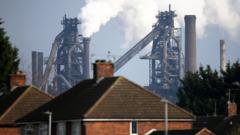
British Steel nationalisation has become a defining moment for the United Kingdom's industrial landscape. The country's sole remaining facility dedicated to manufacturing virgin steel has transitioned into public ownership following an extended period marked by considerable uncertainty regarding its operational continuity and long-term viability. This significant development represents a pivotal intervention by the government to preserve critical steelmaking capacity within British territory.
The Context Behind the Government Intervention
The decision to proceed with British Steel nationalisation stemmed from escalating challenges that threatened the facility's survival. For years, the plant struggled with financial pressures, market volatility, and structural difficulties that made private sector sustainability increasingly difficult. The facility represents not merely an industrial asset but a cornerstone of Britain's manufacturing heritage and domestic supply chain resilience.
Strategic Importance of Virgin Steel Production
Virgin steel production capacity holds paramount significance for national economic security and industrial independence. Unlike recycled steel operations, virgin steel manufacturing requires sophisticated infrastructure, specialized expertise, and substantial capital investment. The UK's position as a leading industrialized nation depends partly on maintaining indigenous steelmaking capabilities. Loss of this facility would have created substantial gaps in domestic production capacity and increased reliance on international suppliers for essential materials fundamental to construction, automotive, aerospace, and defence sectors.
Economic and Employment Implications
Beyond production metrics, British Steel nationalisation carries profound employment consequences. The facility provides thousands of direct and indirect jobs across manufacturing, logistics, engineering, and related services. The facility supports entire communities dependent on its operations, making its preservation a matter of social and regional economic importance. Workers, suppliers, and service providers throughout the supply chain faced potential displacement had operations ceased.
Market Pressures and Industry Challenges
The steel industry globally has confronted mounting pressures from international competition, fluctuating raw material costs, and evolving market demands. The UK facility specifically faced competitive disadvantages from cheaper imports and energy costs that challenged profitability under private ownership. Government intervention through British Steel nationalisation acknowledged that purely market-driven mechanisms had proven insufficient to sustain this strategically essential infrastructure.
Future Prospects and Long-Term Vision
The nationalisation of British Steel represents not merely crisis management but an opportunity to restructure operations for sustainable prosperity. Under public stewardship, the facility can pursue modernization investments, technological upgrades, and operational efficiencies that might not have materialized under private constraints. The transition enables strategic planning oriented toward long-term resilience rather than short-term financial returns.
Conclusion
The British Steel nationalisation decision underscores government commitment to preserving critical industrial capacity during challenging circumstances. This intervention protects employment, maintains domestic production capabilities, and demonstrates recognition that certain strategic assets require public sector support to ensure continued operation in the national interest.


