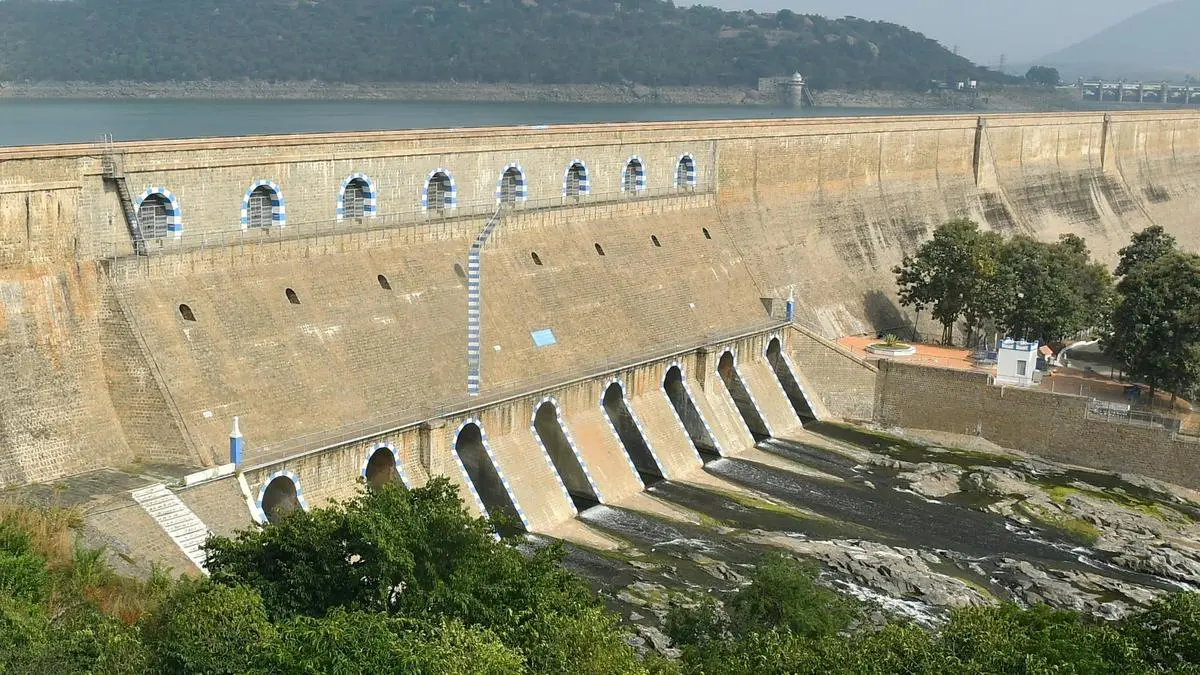
The monsoon season is a crucial time for India, as it brings much-needed rainfall to replenish the country’s key reservoirs. However, this year has been a cause for concern as the level in key reservoirs has dropped to 61.65 per cent of its total capacity. This is due to the fact that the country has received only 65% of the expected rainfall so far this year, which is a significant deficiency.
The current situation is a cause for worry, as the water stored in these reservoirs is essential for various purposes, including irrigation, drinking water, and hydropower generation. With the monsoon season being the primary source of water for these reservoirs, the deficient rainfall has led to a decrease in their water levels.
According to the latest data from the Central Water Commission, the total storage capacity of 91 major reservoirs in the country is 183.565 billion cubic meters (BCM). However, as of now, the water level in these reservoirs stands at only 61.65 per cent of their total capacity. This is a significant drop from the same period last year when the water level was at 80.44 per cent of the total capacity.
The deficient rainfall has been a major factor in the decrease of water levels in these reservoirs. The India Meteorological Department (IMD) has reported that the country has received only 65% of the expected rainfall so far this year. This is a significant decrease from the long period average (LPA) of 88% for the same period. The LPA is the average rainfall received by the country during the monsoon season from 1961 to 2010.
The IMD has also predicted that the rainfall deficiency is likely to continue in the coming weeks, which could further impact the water levels in key reservoirs. This situation calls for immediate action to conserve water and manage the available resources efficiently.
The government has already taken several measures to address the situation. The Ministry of Jal Shakti has issued advisories to all states to manage their water resources efficiently and to prioritize the use of water for essential purposes. The ministry has also urged the states to take necessary steps to recharge groundwater and to promote water conservation measures.
The government has also launched the Jal Shakti Abhiyan, a water conservation campaign, to create awareness about the importance of water conservation and to encourage people to actively participate in water conservation activities. The campaign aims to make water conservation a people’s movement and to ensure the sustainable management of water resources.
Apart from these initiatives, the government is also working on long-term solutions to address the issue of water scarcity in the country. The Jal Jeevan Mission, launched by the government last year, aims to provide tap water connections to every rural household by 2024. This will not only ensure access to safe drinking water but also reduce the dependence on water stored in reservoirs.
Moreover, the government is also promoting the use of modern irrigation techniques and water-efficient crops to reduce the pressure on water resources. The implementation of rainwater harvesting techniques and the rejuvenation of traditional water bodies are also being encouraged to conserve water.
The current situation may seem alarming, but it also presents an opportunity for us to come together and work towards conserving water. It is essential for us to realize the value of water and to use it wisely. Every individual can contribute to water conservation by adopting simple measures like fixing leaky taps, using water-efficient appliances, and avoiding wastage.
The deficient rainfall and the decrease in water levels in key reservoirs may be a cause for concern, but it is not a cause for despair. With timely action and collective efforts, we can overcome this challenge and ensure the sustainable management of our water resources. Let us all join hands and work towards a water-secure future for our country.