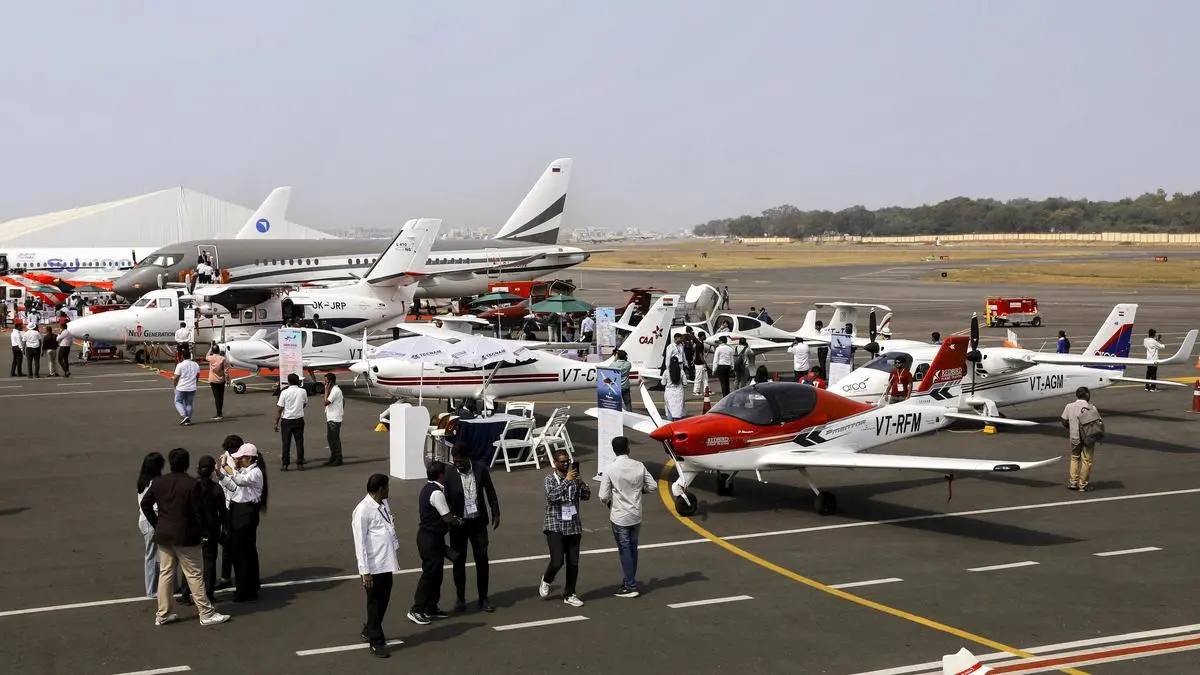
Wings India 2026, the flagship event of the Indian aviation industry, recently concluded in Hyderabad with much fanfare and enthusiasm. The event, organized by the Ministry of Civil Aviation and the Federation of Indian Chambers of Commerce and Industry (FICCI), brought together key stakeholders from the aviation sector to discuss the opportunities and challenges facing the country’s air travel industry.
The three-day event witnessed the participation of over 500 exhibitors from 35 countries, including major players in the aviation industry such as Boeing, Airbus, and Rolls-Royce. The event also saw the presence of top government officials, industry experts, and delegates from various airlines, airports, and aviation-related organizations.
The theme of Wings India 2026, “Flying for All”, highlighted the government’s vision to make air travel accessible and affordable for all citizens of the country. The event provided a platform for discussions on various aspects of the aviation industry, including infrastructure development, technology advancements, and policy reforms.
One of the key highlights of the event was the unveiling of the National Civil Aviation Policy (NCAP) 2026, which aims to make India one of the top three aviation markets in the world by 2026. The policy focuses on promoting regional connectivity, developing new airports, and enhancing the overall passenger experience. It also aims to increase the number of domestic and international flights, boost cargo operations, and attract more investments in the sector.
The event also shed light on the immense potential of the Indian aviation market. With a population of over 1.3 billion and a growing middle class, India is expected to become the third-largest aviation market by 2025. The country’s domestic air passenger traffic has been growing at a rate of 20% annually, and it is estimated that by 2037, India will have 1.1 billion air passengers.
However, along with the opportunities, the event also highlighted the challenges facing the Indian aviation industry. The sector has been facing issues such as high operating costs, inadequate infrastructure, and regulatory hurdles. The event provided a platform for discussions on how to address these challenges and make the Indian aviation industry more competitive.
One of the major challenges facing the industry is the high cost of aviation fuel in India, which is one of the highest in the world. This makes it difficult for airlines to offer competitive fares and affects their profitability. The government has taken steps to address this issue by reducing excise duty on aviation turbine fuel and introducing a regional connectivity scheme to promote air travel in remote areas.
Another challenge is the lack of adequate infrastructure, especially in tier 2 and tier 3 cities. The government has announced plans to develop 100 new airports by 2024 to improve regional connectivity. The event also saw discussions on the use of technology to enhance airport infrastructure and improve passenger experience.
The event also focused on the need for policy reforms to make the Indian aviation industry more competitive. The government has already taken steps in this direction by introducing the NCAP 2026 and allowing 100% foreign direct investment in the sector. However, there is still a need for further reforms to attract more investments and promote healthy competition in the market.
Wings India 2026 also highlighted the importance of sustainable growth in the aviation industry. With the increasing concerns about climate change, the industry needs to adopt eco-friendly practices to reduce its carbon footprint. The event saw discussions on the use of biofuels, electric and hybrid aircraft, and other sustainable solutions to make the industry more environmentally friendly.
In conclusion, Wings India 2026 was a successful event that brought together all stakeholders of the Indian aviation industry to discuss the opportunities and challenges facing the sector. The event provided a platform for fruitful discussions and collaborations, which will help in achieving the government’s vision of making India a global aviation hub. With the right policies, investments, and technological advancements, the Indian aviation industry is poised for a bright future, and Wings India 2026 has set the stage for its growth and development.