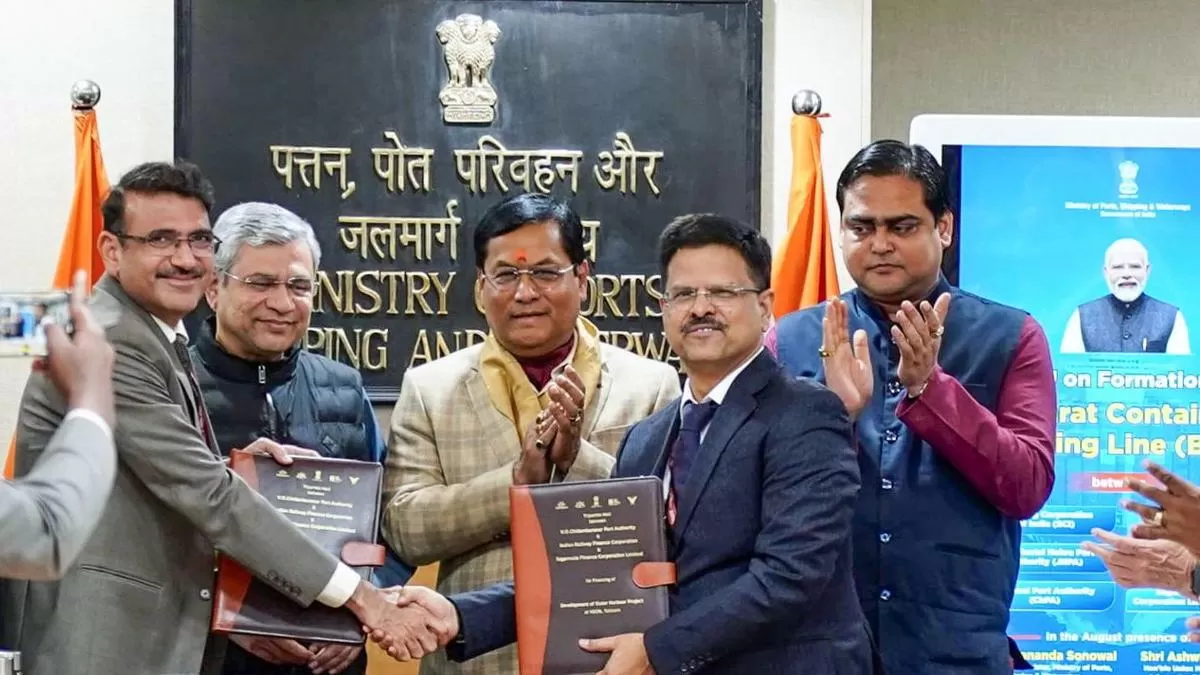
Aligned with the Rs 10,000-crore Container Manufacturing Assistance Scheme from the 2026-27 Union Budget, BCSL aims to boost containerised cargo handling, which accounts for two-thirds of India’s international trade value.
India’s international trade has been growing at a rapid pace, with containerised cargo handling playing a crucial role in this growth. In fact, two-thirds of India’s international trade value is accounted for by containerised cargo. This highlights the importance of efficient and effective container handling in the country’s trade sector. In line with this, the government has announced the Rs 10,000-crore Container Manufacturing Assistance Scheme in the 2026-27 Union Budget, with the aim of boosting containerised cargo handling. This move has been welcomed by the industry and is expected to have a positive impact on India’s trade and economy.
The Container Manufacturing Assistance Scheme, or CMAS, is a step towards strengthening India’s position as a global trade hub. Under this scheme, the government will provide financial assistance to container manufacturers to increase their production capacity and upgrade their technology. This will not only boost the domestic manufacturing sector but also make India more competitive in the global market. The scheme is expected to create job opportunities and attract investments in the container manufacturing industry, thereby contributing to the overall growth of the economy.
The announcement of CMAS has been met with enthusiasm by the industry players. The Indian container manufacturing industry has been growing steadily over the years, but it still has a long way to go to catch up with the global leaders. With the government’s support, the industry is expected to witness a significant boost in its growth and development. This will not only benefit the manufacturers but also the entire supply chain, including shipping lines, ports, and logistics companies.
One of the key objectives of CMAS is to increase the production of containers in India. Currently, India imports a large number of containers from other countries, which adds to the cost of trade. With the implementation of CMAS, the country will be able to produce a significant number of containers domestically, reducing its dependence on imports. This will not only save costs but also strengthen India’s self-sufficiency in the trade sector. Moreover, the increased production will also lead to a reduction in the lead time for container availability, making the entire process more efficient.
Another important aspect of CMAS is the focus on technology upgradation. The scheme aims to encourage manufacturers to adopt advanced technology and processes, which will improve the quality and efficiency of container production. This will not only benefit the manufacturers but also the end-users, as they will have access to high-quality containers that meet international standards. This will also enhance India’s reputation as a reliable and quality-conscious trade partner, thereby attracting more business opportunities.
The implementation of CMAS is also expected to have a positive impact on the environment. With the use of advanced technology, the manufacturing process will become more eco-friendly, reducing the carbon footprint. This aligns with the government’s vision of promoting sustainable development and reducing the impact of industries on the environment. Moreover, the increased production of containers in India will also reduce the need for transportation, leading to a decrease in carbon emissions.
The container manufacturing industry is a crucial part of India’s trade sector, and the government’s focus on its growth and development is a step in the right direction. The implementation of CMAS will not only boost the industry but also have a ripple effect on the entire trade ecosystem. It will not only create job opportunities but also attract investments, thereby contributing to the country’s economic growth. With the increasing competition in the global market, it is essential for India to strengthen its position as a trade hub, and CMAS is a significant step towards achieving this goal.
In conclusion, the announcement of the Rs 10,000-crore Container Manufacturing Assistance Scheme in the 2026-27 Union Budget is a welcome move that will have a positive impact on India’s trade and economy. It will boost the domestic manufacturing sector, make India more competitive in the global market, and promote sustainable development. With the government’s support, the container manufacturing industry is expected to witness significant growth and contribute to India’s journey towards becoming a global trade powerhouse.