
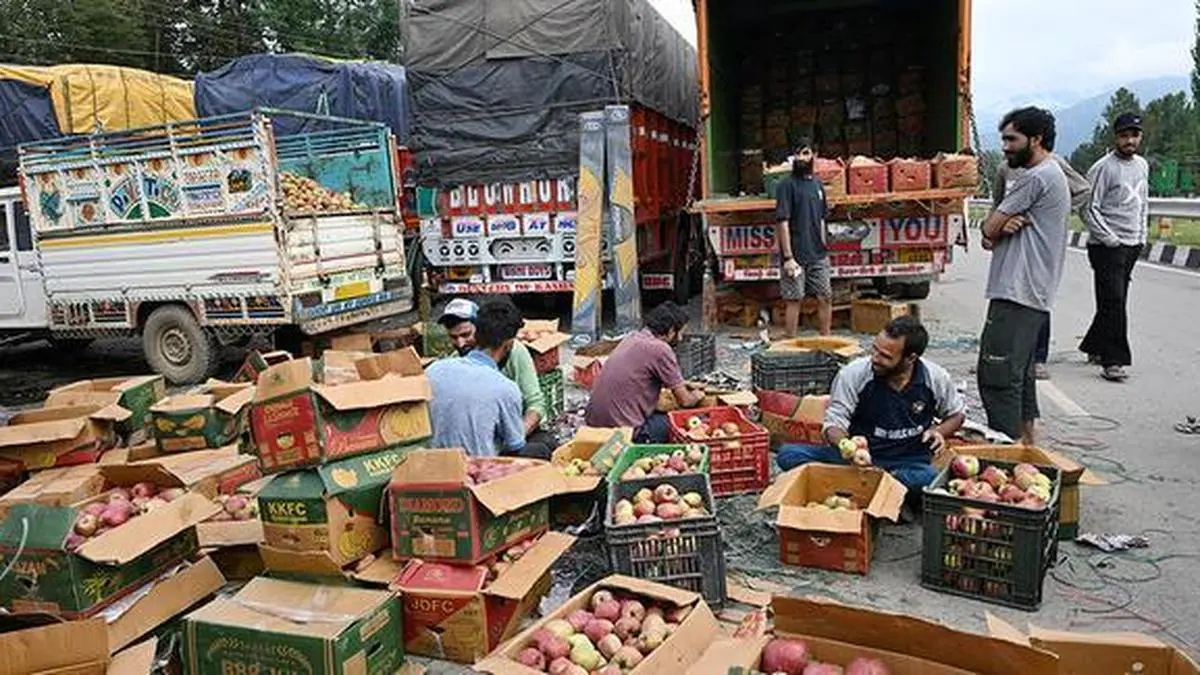
Apple growers and traders in Kashmir are facing a new challenge as the government has recently reduced the duty and lowered the landing prices for imported apples. This move has sparked a heated debate among the local apple industry, with many arguing that it would make it difficult for domestic produce to compete. While the intentions behind this decision may be well-meaning, it is important to consider the potential impact it could have on the livelihoods of our local apple growers and traders.
Kashmir is known for its delicious and high-quality apples, which are not only a source of pride for our region but also a major contributor to our economy. The apple industry provides employment to thousands of people and is a major source of income for many families. However, with the reduced duty and lower landing prices for imported apples, our local produce may struggle to compete in the market.
One of the main concerns raised by the apple growers and traders is the potential loss of revenue. With the reduced duty, imported apples will become cheaper, making them more attractive to consumers. This could result in a decrease in demand for local apples, leading to a decline in sales and ultimately, a loss of income for our apple growers and traders. This could have a ripple effect on the entire industry, affecting not only the farmers but also the suppliers, transporters, and other businesses that rely on the apple industry.
Moreover, the lower landing prices for imported apples could also lead to unfair competition. Our local apple growers have to adhere to strict quality standards and incur various costs such as transportation, packaging, and marketing. On the other hand, imported apples may not have to meet the same standards and could be sold at a lower price, giving them an unfair advantage in the market. This could result in a significant loss for our local apple industry, which has worked hard to establish a reputation for producing high-quality apples.
Another concern is the impact on the environment. Imported apples have to travel long distances to reach our markets, which not only increases carbon emissions but also contributes to the global carbon footprint. In contrast, our local apples are grown and harvested in Kashmir, reducing the carbon footprint and promoting sustainable practices. By reducing the duty and lowering the landing prices for imported apples, we are not only putting our local industry at risk but also compromising our efforts towards a greener and more sustainable future.
It is important to note that the decision to reduce the duty and lower the landing prices for imported apples was made with the intention of making apples more affordable for consumers. While this may seem like a positive move, it is essential to consider the long-term effects on our local apple industry. Instead of relying on imported apples, we should focus on promoting and supporting our local produce. This will not only benefit our economy but also help in preserving our cultural heritage and promoting sustainable practices.
Furthermore, the government should also consider providing support and incentives to our local apple growers and traders. This could include subsidies, better infrastructure, and marketing assistance to help them compete in the market. By investing in our local industry, we can ensure its growth and sustainability, which will have a positive impact on our economy and the livelihoods of our people.
In conclusion, the reduced duty and lower landing prices for imported apples may seem like a good idea in the short term, but it could have severe consequences for our local apple industry. It is crucial for the government to consider the concerns raised by the apple growers and traders and take necessary steps to protect our local industry. As consumers, we also have a role to play in supporting our local produce and promoting sustainable practices. Let us all come together to protect and promote our delicious and high-quality Kashmiri apples.





