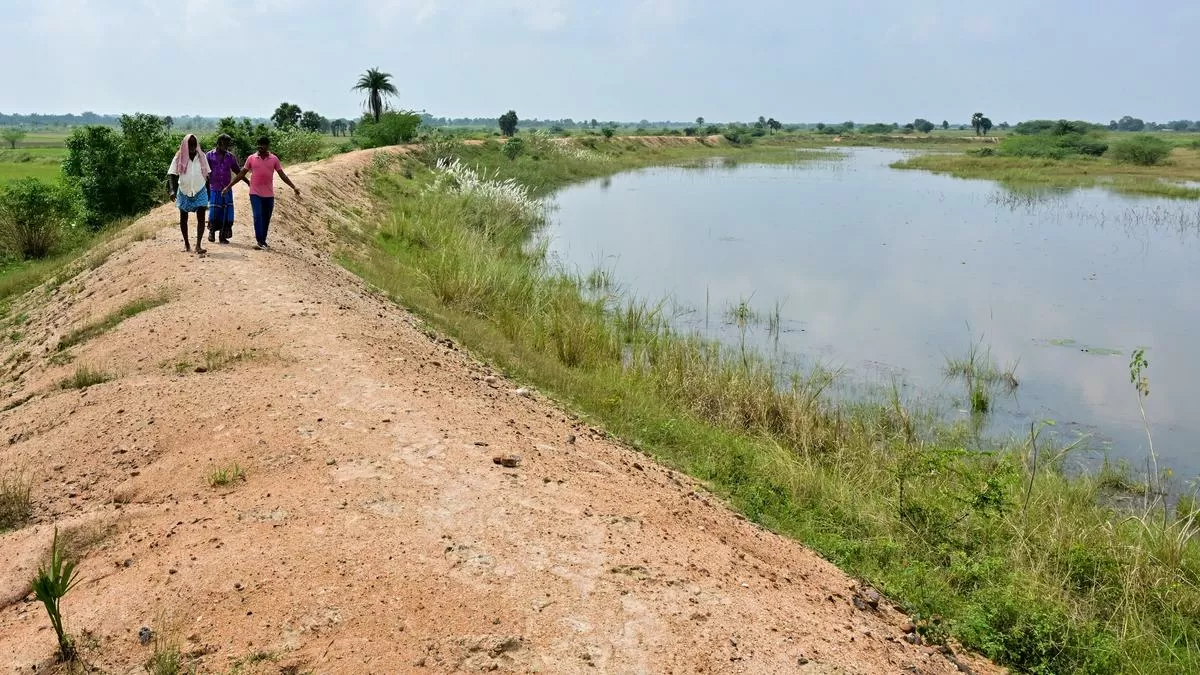
Land acquisition is a crucial process for the development of any nation. It involves the acquisition of land by the government for various developmental projects such as infrastructure, industries, and urbanization. While this process is necessary for progress, it often faces resistance from the local communities who fear the loss of their livelihoods. In the state of Tamil Nadu, land acquisition is currently underway in nine villages, but one village, Eganapuram, continues to protest against it.
The nine villages in question are located in the Tiruvallur district of Tamil Nadu. The government has identified these villages for the acquisition of land for the Chennai-Bengaluru Industrial Corridor (CBIC) project. This project aims to boost industrialization and create job opportunities in the state. The government has assured the villagers that they will be adequately compensated for their land and will also be provided with alternative means of livelihood. However, the villagers of Eganapuram remain unconvinced and continue to protest against the land acquisition.
The villagers of Eganapuram are primarily farmers and depend on agriculture for their livelihood. They fear that the acquisition of their land will not only result in the loss of their homes but also their only source of income. The fertile land in Eganapuram is suitable for cultivation, and the villagers have been cultivating it for generations. They are worried that once their land is acquired, they will be left with no means to support themselves and their families.
The protests in Eganapuram have been going on for several months now, with the villagers refusing to give up their land. They have been holding demonstrations and rallies, demanding that their land be excluded from the acquisition process. The villagers have also submitted petitions to the government, highlighting their concerns and requesting them to reconsider the acquisition of their land.
The government, on the other hand, has been trying to address the concerns of the villagers. They have held several meetings with the villagers and have assured them that their interests will be taken into consideration. The government has also promised to provide the villagers with alternative land for cultivation and employment opportunities in the industries that will be set up in the area. They have also assured the villagers that they will be adequately compensated for their land as per the Land Acquisition Act.
Despite the government’s efforts, the villagers of Eganapuram remain adamant in their protests. They are not willing to give up their land, which they consider to be their only source of livelihood. The fear of losing their homes and their way of life has made them resolute in their stance against the land acquisition.
The protests in Eganapuram have gained widespread attention, with many people supporting the villagers’ cause. Social activists, environmentalists, and political parties have also joined the protests, demanding that the government reconsider the acquisition of land in Eganapuram. They argue that the government should prioritize the welfare of the villagers and find alternative solutions for the CBIC project.
The government must understand the concerns of the villagers and address them effectively. The acquisition of land for development projects is necessary, but it should not come at the cost of the livelihoods of the local communities. The government must ensure that the villagers of Eganapuram are adequately compensated and provided with alternative means of livelihood. It is also essential to involve the villagers in the decision-making process and take their opinions into consideration.
In conclusion, while land acquisition is progressing in nine villages in Tamil Nadu, the protests in Eganapuram continue. The villagers’ fears of losing their livelihoods are valid, and the government must address them with sensitivity and empathy. The development of the state is crucial, but it should not be at the cost of the well-being of its people. It is time for the government to find a solution that is beneficial for both the development of the state and the welfare of its people.