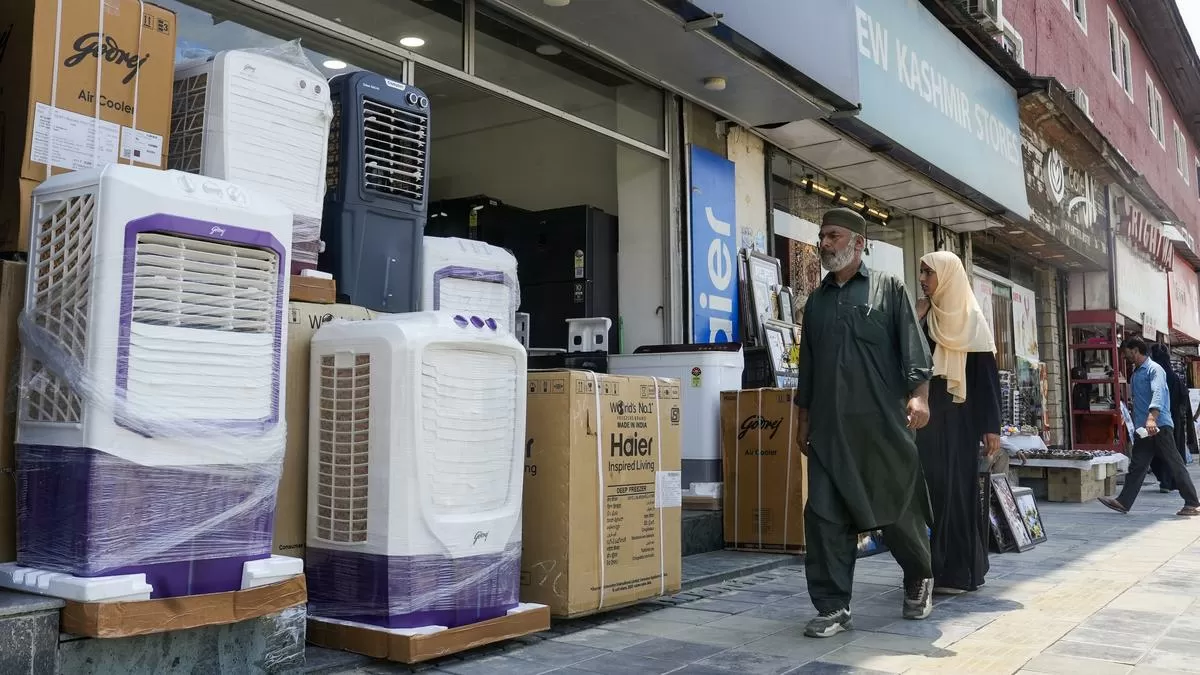
The Indian government has recently launched a new scheme to boost the manufacturing of white goods in the country. The Production Linked Incentive (PLI) scheme, with a total outlay of ₹6,238 crore, was launched in April 2021. This move is expected to give a major push to the domestic production of white goods and make India a global manufacturing hub for these products.
The PLI scheme for white goods is a part of the government’s larger plan to make India self-reliant and reduce its dependence on imports. White goods, which include products like air conditioners, refrigerators, and washing machines, are among the most imported items in the country. With the implementation of this scheme, the government aims to increase the domestic production of these goods and reduce the import bill.
Under the PLI scheme, eligible companies will receive incentives for incremental sales of manufactured goods. The incentives will be given for a period of five years, starting from 2021-22. The scheme is expected to benefit both large and small manufacturers, as it has been designed to encourage competition and promote the growth of the entire sector.
One of the key objectives of the PLI scheme is to attract global investments in the white goods sector. The government has set a target of attracting investments worth ₹7,920 crore and creating additional production capacity of ₹1,68,000 crore under this scheme. This will not only boost the manufacturing sector but also create job opportunities for the youth of the country.
The PLI scheme is also expected to have a positive impact on the environment. With the increase in domestic production, the need for imports will reduce, leading to a decrease in carbon emissions from transportation. Moreover, the scheme also encourages manufacturers to adopt energy-efficient technologies, which will further contribute to reducing the carbon footprint.
The launch of the PLI scheme has been welcomed by the industry players. They believe that this move will not only boost the manufacturing sector but also make India a competitive player in the global market. The scheme will provide a level playing field for domestic manufacturers and help them compete with international brands.
The PLI scheme for white goods is a step towards fulfilling the vision of a self-reliant India. It aligns with the government’s ‘Make in India’ initiative and will help in achieving the goal of making India a global manufacturing hub. The scheme is also in line with the government’s focus on promoting the use of clean and green energy.
The scheme has been designed after extensive consultations with the industry and experts. The government has taken into consideration the challenges faced by the manufacturers and has come up with a comprehensive plan to address them. The incentives provided under the scheme will not only boost production but also encourage manufacturers to invest in research and development, leading to innovation and technological advancements in the sector.
The PLI scheme for white goods is a testament to the government’s commitment towards creating a conducive environment for the growth of the manufacturing sector. It is a well-thought-out plan that aims to make India a global leader in the production of white goods. The scheme is expected to have a multiplier effect on the economy, with its ripple effect on various other sectors.
In conclusion, the launch of the PLI scheme for white goods is a significant step towards achieving the goal of a self-reliant India. It will not only boost the manufacturing sector but also contribute to the country’s economic growth. The scheme is a testament to the government’s vision and determination to make India a global manufacturing hub. With the right implementation and support from all stakeholders, the PLI scheme has the potential to transform the white goods sector and make India a leader in this field.