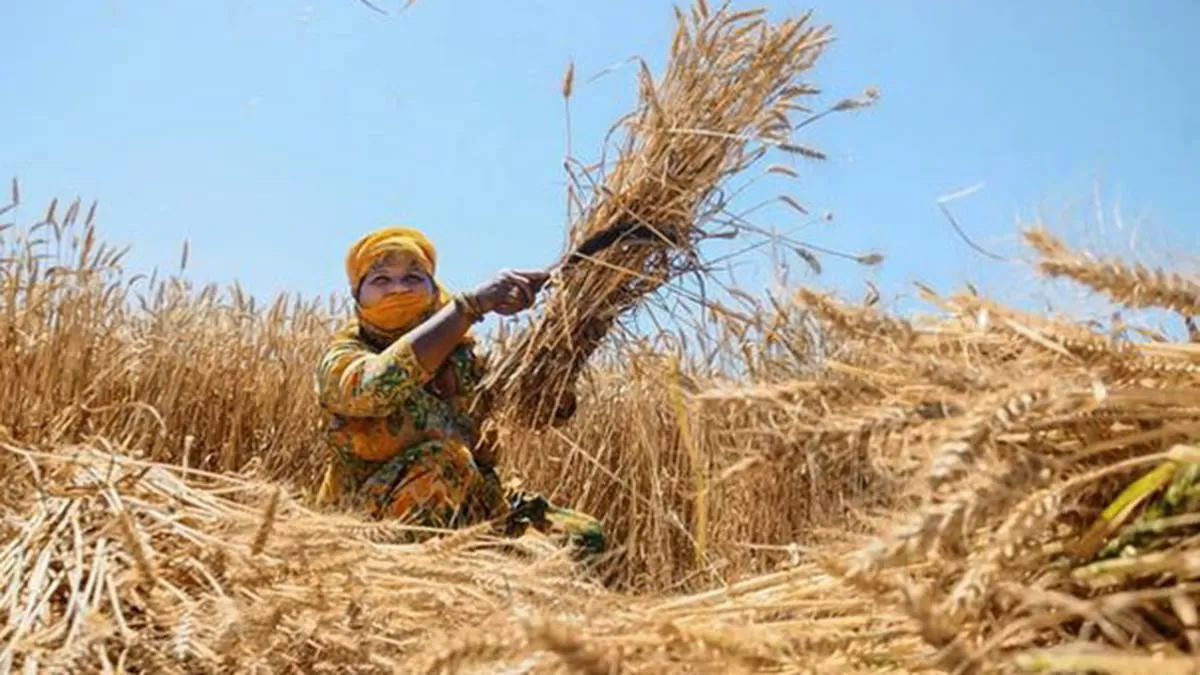
The Indian government has set a new record target for wheat production for the upcoming 2025-26 crop year. This target has been set at an impressive 119 million tonnes, which is a significant increase from the previous year’s target of 108 million tonnes. This ambitious goal has been set with the aim of further strengthening India’s position as one of the top wheat producers in the world.
The decision to set this record target was taken in a recent meeting of the Cabinet Committee on Economic Affairs, chaired by Prime Minister Narendra Modi. The committee took into account various factors such as the increasing demand for wheat, favorable weather conditions, and the government’s continuous efforts to boost agricultural productivity.
The target of 119 million tonnes has been set for the period of July 2025 to June 2026, which marks the start of the crop year. This target is not only higher than the previous year’s target but also surpasses the record production of 111.61 million tonnes achieved in the 2019-20 crop year.
This record target has been set with the aim of ensuring food security for the growing population of India. Wheat is a staple food for a large portion of the population, and it is crucial to maintain a steady supply to meet the ever-increasing demand. With this record target, the government is taking proactive steps to ensure that there is no shortage of wheat in the country and to keep the prices stable.
The government has also recognized the role of farmers in achieving this target and has assured them of all necessary support and assistance. The use of advanced technologies, better quality seeds, and effective irrigation methods will be promoted to increase productivity and reduce wastage. The government is also committed to providing timely and adequate credit to farmers to meet their input costs and to encourage them to adopt modern farming practices.
The government’s efforts to boost wheat production are not limited to setting record targets. In recent years, various schemes and initiatives have been launched to improve the overall agricultural sector. The Pradhan Mantri Fasal Bima Yojana, Pradhan Mantri Krishi Sinchayee Yojana, and the Soil Health Card Scheme are some of the initiatives that have been implemented to support farmers and increase their income.
Moreover, the government has also taken steps to increase the minimum support price (MSP) for wheat, which will ensure that farmers get a fair price for their produce. This, in turn, will motivate farmers to increase their production and contribute to achieving the record target.
The record target of 119 million tonnes for wheat production is a testament to the government’s commitment towards the growth of the agricultural sector. It is a reflection of the government’s vision to make India self-sufficient in food production and reduce the country’s dependency on imports. The government’s efforts are not only limited to increasing production but also to improve the overall quality of wheat, which will further enhance its market value.
The record target has also been welcomed by various stakeholders, including agricultural experts and industry leaders. They believe that this target will not only benefit farmers but also contribute to the overall economic growth of the country. The increase in wheat production will create employment opportunities, boost rural income, and strengthen the country’s economy.
In conclusion, the government’s decision to set a record target of 119 million tonnes for wheat production is a significant step towards achieving self-sufficiency in food production. It reflects the government’s determination to support farmers and promote sustainable agricultural practices. With the continuous efforts of the government and the hard work of farmers, this ambitious target can be achieved, and India can emerge as a global leader in wheat production.