
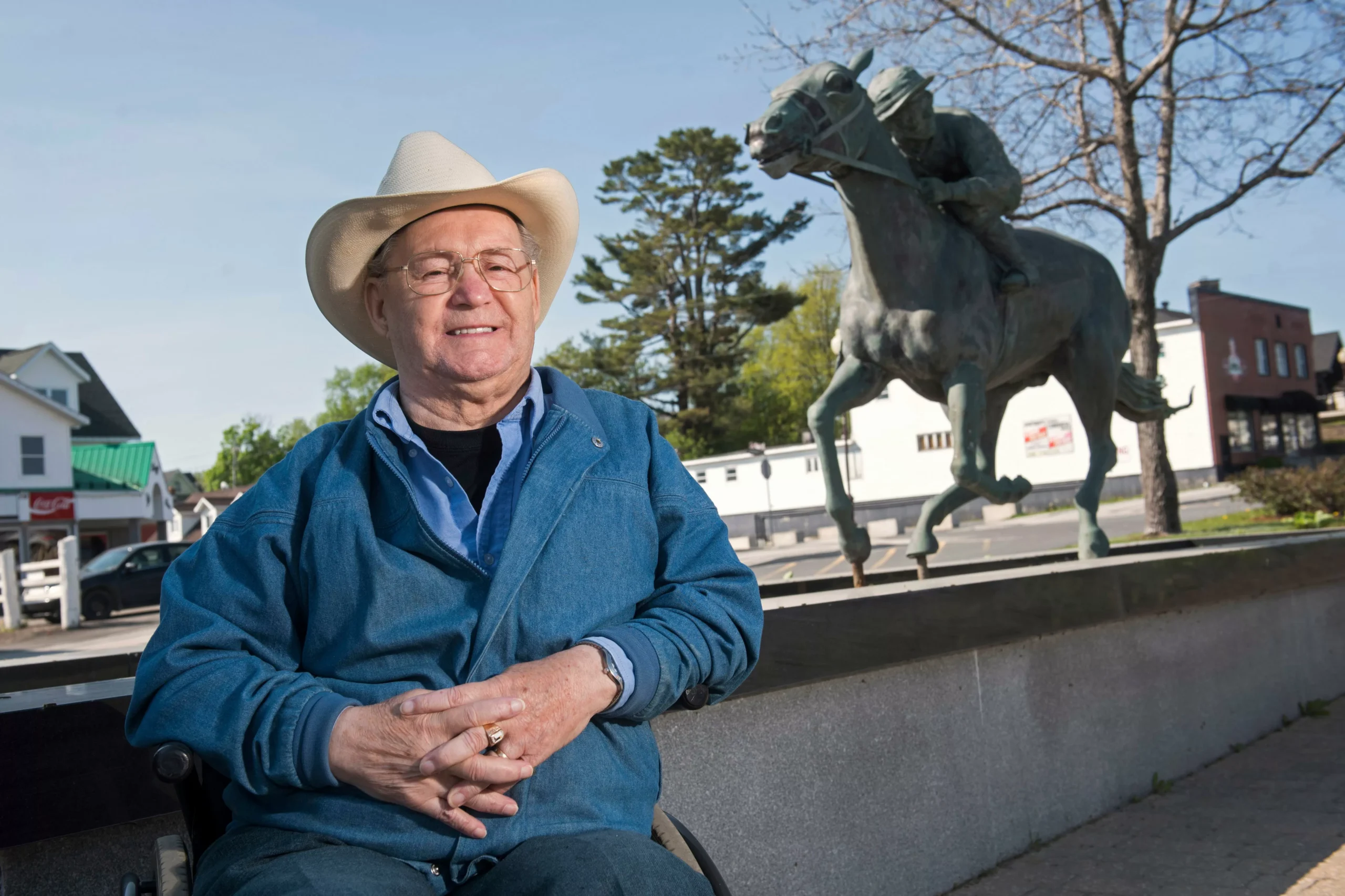
Ron Turcotte, a Canadian jockey, is a name that will forever be etched in the history of horse racing. With a career spanning nearly two decades, Turcotte achieved remarkable success and became one of the most celebrated jockeys of all time. He won more than 3,000 races, including the prestigious Triple Crown, before a tragic accident ended his career in 1978. Despite the challenges he faced, Turcotte’s determination and resilience continue to inspire and motivate people around the world.
Born on July 22, 1941, in Drummond, New Brunswick, Turcotte’s love for horses was evident from a young age. He began his career as a jockey at the age of 18 and quickly made a name for himself in the racing world. In 1962, he won his first major race, the Canadian Oaks, and went on to win numerous other races, including the Queen’s Plate, the Kentucky Derby, and the Preakness Stakes.
However, it was in 1973 that Turcotte made history when he rode the legendary horse, Secretariat, to victory in the Triple Crown. This was a feat that had not been achieved in 25 years and solidified Turcotte’s place in the racing world. His partnership with Secretariat is still considered one of the greatest in horse racing history, and their record-breaking performance in the Belmont Stakes is still talked about to this day.
Turcotte’s success on the track was not limited to North America. He also had a successful career in Europe, winning races in France, England, and Ireland. He was known for his exceptional riding skills and his ability to connect with horses, making him a favorite among trainers and owners.
However, tragedy struck on July 13, 1978, when Turcotte fell off his horse during a race at Belmont Park. The fall left him with multiple injuries, including a fractured spine that left him paralyzed from the waist down. Many thought this would be the end of Turcotte’s career, but he refused to let his injuries define him.
Despite the challenges he faced, Turcotte remained positive and determined to overcome his disability. He underwent intense rehabilitation and even returned to the track as a trainer and owner. He also became an advocate for disabled jockeys and helped raise awareness and funds for their support.
Turcotte’s legacy in the racing world is not just limited to his achievements on the track. He is also remembered for his sportsmanship and humility. He was known for his kind and gentle nature, and his fellow jockeys often looked up to him as a role model.
In 1979, Turcotte was inducted into the Canadian Horse Racing Hall of Fame, and in 1980, he was inducted into the National Museum of Racing and Hall of Fame in the United States. He also received numerous other accolades and awards throughout his career, including the prestigious George Woolf Memorial Jockey Award.
Today, at the age of 80, Turcotte continues to inspire and motivate people with his positive attitude and determination. He remains an icon in the racing world and a symbol of resilience and perseverance. His story is a reminder that no matter what challenges we face, with determination and a positive mindset, we can overcome them and achieve greatness.
In conclusion, Ron Turcotte’s career may have been cut short, but his legacy will live on forever. He will always be remembered as one of the greatest jockeys of all time, and his name will forever be associated with the sport of horse racing. His remarkable achievements and unwavering spirit will continue to inspire generations to come.





