
The Chilling Impact of Censorship in Higher Education
Higher education has long been seen as a place for intellectual growth and freedom of expression. It is a space where students can engage in critical thinking, challenge societal norms, and explore diverse perspectives. However, in recent years, there has been a growing trend of censorship on college and university campuses, stifling this important aspect of higher education.
Perhaps because college students are generally considered adults, and college and university campuses and classrooms have long been viewed as places to exchange ideas and challenge the status quo, censorship in higher education often goes unnoticed or unchallenged. But make no mistake, the chilling effects of censorship are far-reaching and have a detrimental impact on the educational experience of students.
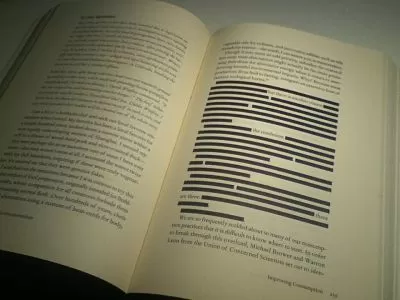
Censorship in higher education takes many forms, from the banning of controversial speakers and books to the restriction of certain topics and discussions in the classroom. It is often justified under the guise of protecting students from offensive or harmful material. However, this approach undermines the very purpose of higher education – to expose students to a wide range of ideas and perspectives.
One of the most concerning consequences of censorship in higher education is the suppression of free speech. The First Amendment of the United States Constitution guarantees the right to free speech, and this right should be protected on college and university campuses. However, in recent years, we have seen a rise in the number of speakers being disinvited or cancelled due to pressure from students or faculty who disagree with their views. This not only limits the diversity of ideas on campus but also sends a dangerous message that certain viewpoints are not welcome.
Moreover, censorship in higher education can have a chilling effect on academic freedom. Professors may feel hesitant to discuss controversial topics or challenge mainstream beliefs for fear of backlash or repercussions. This not only limits their ability to teach effectively but also hinders their research and academic pursuits. It is essential that academic freedom is protected to ensure the advancement of knowledge and critical thinking.
Censorship also has a significant impact on students’ ability to learn and grow. By limiting the range of ideas and perspectives they are exposed to, students are deprived of the opportunity to develop critical thinking skills and form their own opinions. Instead, they are fed a narrow view of the world, which does not prepare them for the complexities of the real world. In a diverse and globalized society, it is crucial that students are exposed to a variety of perspectives to become well-rounded individuals.
Furthermore, censorship in higher education can create a culture of fear and self-censorship. Students may feel hesitant to express their opinions or engage in open discussions for fear of being labeled as offensive or politically incorrect. This not only stifles their individual growth but also hinders the free exchange of ideas and the pursuit of knowledge.
It is also worth noting that censorship in higher education disproportionately affects marginalized groups. Often, it is these groups whose voices and perspectives are silenced in the name of protecting others. This further perpetuates inequalities and hinders progress towards a more inclusive and diverse society.
In conclusion, censorship in higher education has a chilling impact on students, professors, and the academic environment as a whole. It stifles free speech, limits academic freedom, and hinders the development of critical thinking skills. It is essential that we protect the fundamental principles of higher education – the free exchange of ideas and the pursuit of knowledge. As students, professors, and members of society, it is our responsibility to challenge censorship and promote a culture of open-mindedness and intellectual diversity on college and university campuses. Only then can we truly fulfill the purpose of higher education – to prepare students to become informed, engaged, and critical citizens of the world.





