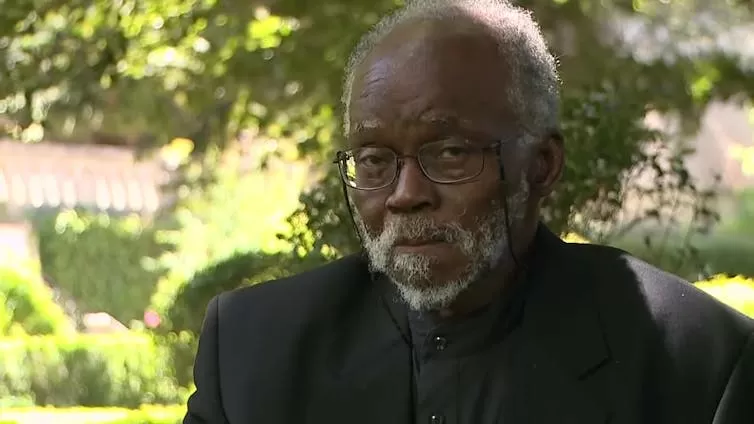
Valentin-Yves Mudimbe, a Congolese thinker, philosopher and linguist, passed away on April 21, 2025 at the age of 83. He was in the United States at the time, attending a conference on African philosophy. His passing leaves a void in the world of intellectual discourse, but his legacy will continue to inspire and challenge us.
Born in 1941 in the Democratic Republic of Congo, Mudimbe was a trailblazer in the field of African philosophy. He was not only a highly respected academic, but also a prolific writer, with over 20 books and countless articles to his name. His work was driven by a deep desire to challenge the dominant Western-centric narrative of Africa’s history and development.
One of Mudimbe’s most notable contributions was his critique of the concept of “African-ness.” He argued that this term, often used to homogenize and simplify the diverse cultures and identities of the continent, was a tool of oppression and colonization. He believed that Africa, as a continent, was continuously being “invented” by Western powers, who imposed their own interpretations and ideologies upon it. Through his work, Mudimbe urged us to look beyond this simplistic narrative and uncover the complexities and nuances of African cultures.
Mudimbe’s critiques extended beyond the realm of philosophy and into the fields of literature, linguistics, and anthropology. He challenged the ways in which Western scholars have studied and written about Africa, arguing that they often relied on outdated and biased methods. He advocated for a decolonized approach to the study of Africa, one that took into account the perspectives and voices of its people.
His impact on the study of African languages cannot be overstated. Mudimbe was a staunch advocate for the preservation and recognition of indigenous languages, and he believed that language played a crucial role in shaping our understanding of the world. He argued against the imposition of European languages in Africa and encouraged the use and celebration of indigenous languages.
Mudimbe’s work was not limited to the academic sphere; he also engaged with the wider public through his writing. He was a regular contributor to newspapers and magazines, using his platform to raise awareness about various issues affecting Africa. His writing was powerful and thought-provoking, challenging readers to reconsider their preconceived notions about the continent.
His passing is a great loss to the intellectual community, but his legacy will live on through his works. Mudimbe’s ideas and insights will continue to inspire critical thinking and challenge the dominant narratives that have long defined Africa. He leaves behind a legacy of intellectual courage, innovation, and a deep commitment to decolonization.
As we mourn the loss of this great thinker, it is important to reflect on his message and learn from his example. Mudimbe’s work reminds us of the importance of questioning and challenging established beliefs, and of the power of language in shaping our understanding of the world. He leaves behind a rich and diverse body of work that will continue to inspire and provoke us for years to come.
In conclusion, Valentin-Yves Mudimbe was a true pioneer in the field of African philosophy. He dedicated his life to challenging the dominant narratives that have long defined Africa and encouraging us to see beyond the stereotypes and misconceptions. His legacy will continue to inspire generations of thinkers, philosophers, and linguists, and his contributions will be remembered as an invaluable contribution to the world of intellectual discourse. Valentin-Yves Mudimbe, rest in peace, and may your legacy continue to shape our understanding of Africa and the world.