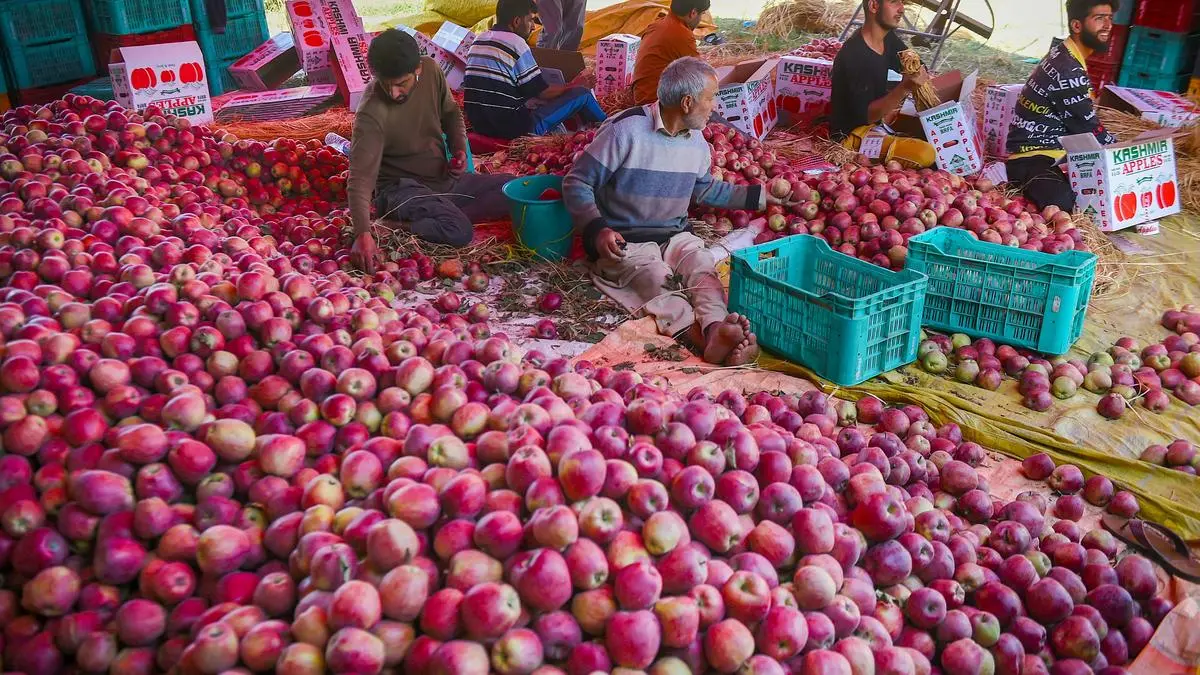
The picturesque Kashmir Valley, known for its breathtaking landscapes and rich cultural heritage, is also renowned for its abundant apple orchards. Every year, the valley produces thousands of tonnes of apples, making it one of the largest apple-producing regions in India. However, this year, the valley is facing a unique challenge – thousands of tonnes of apples remain unsold in 50-60 controlled atmosphere (CA) storages across the region.
The apple season in Kashmir usually starts in July and continues till November. During this time, the valley is bustling with activity as farmers harvest their apples and store them in CA storages to preserve their freshness. These storages are equipped with advanced technology that controls the temperature, humidity, and oxygen levels to keep the apples fresh for a longer period. However, due to the ongoing pandemic and the subsequent lockdowns, the demand for apples has drastically reduced, leading to a surplus of apples in the storages.
The COVID-19 pandemic has affected the entire world, and the agricultural sector is no exception. The closure of markets, restrictions on transportation, and a decrease in demand have all contributed to the current situation in Kashmir. The apple industry, which is a major source of livelihood for thousands of farmers in the valley, has been hit hard by the pandemic. The unsold apples in the CA storages have not only caused financial distress to the farmers but have also raised concerns about the wastage of this precious fruit.
However, amidst this challenging situation, there is a glimmer of hope. The government, along with various organizations and individuals, has stepped in to find a solution to this problem. Efforts are being made to promote the consumption of apples and increase their demand. The government has also announced various schemes and subsidies to support the apple farmers and help them sell their produce. Additionally, many NGOs and social organizations have come forward to buy apples directly from the farmers and distribute them to the needy.
The unsold apples in the CA storages have also opened up new opportunities for the valley. The surplus apples can be used to produce various value-added products such as apple juice, cider, and apple chips. This will not only help in reducing the wastage but also create new avenues for income generation. The government is also encouraging farmers to explore these options and providing them with the necessary support and resources.
Moreover, the unsold apples have also highlighted the need for better infrastructure and marketing strategies in the valley. The government is working towards improving the transportation facilities and setting up new markets to promote the sale of apples. Efforts are also being made to increase the export of apples to other states and countries, which will not only help in reducing the surplus but also boost the economy of the valley.
The apple industry in Kashmir has always been resilient, and it is this resilience that will help overcome the current challenges. The unsold apples in the CA storages may seem like a setback, but they have also brought to light the potential of the valley’s apple industry. With the support of the government, organizations, and individuals, the valley can turn this crisis into an opportunity and emerge stronger.
In conclusion, the situation of thousands of tonnes of unsold apples in the CA storages across the Kashmir Valley may seem daunting, but it has also brought the community together to find solutions. The government’s efforts, along with the support of various organizations and individuals, have instilled hope and positivity in the valley. With the right strategies and initiatives, the valley can overcome this challenge and continue to thrive as one of the largest apple-producing regions in India. Let us all come together and support the apple farmers of Kashmir in this time of need.