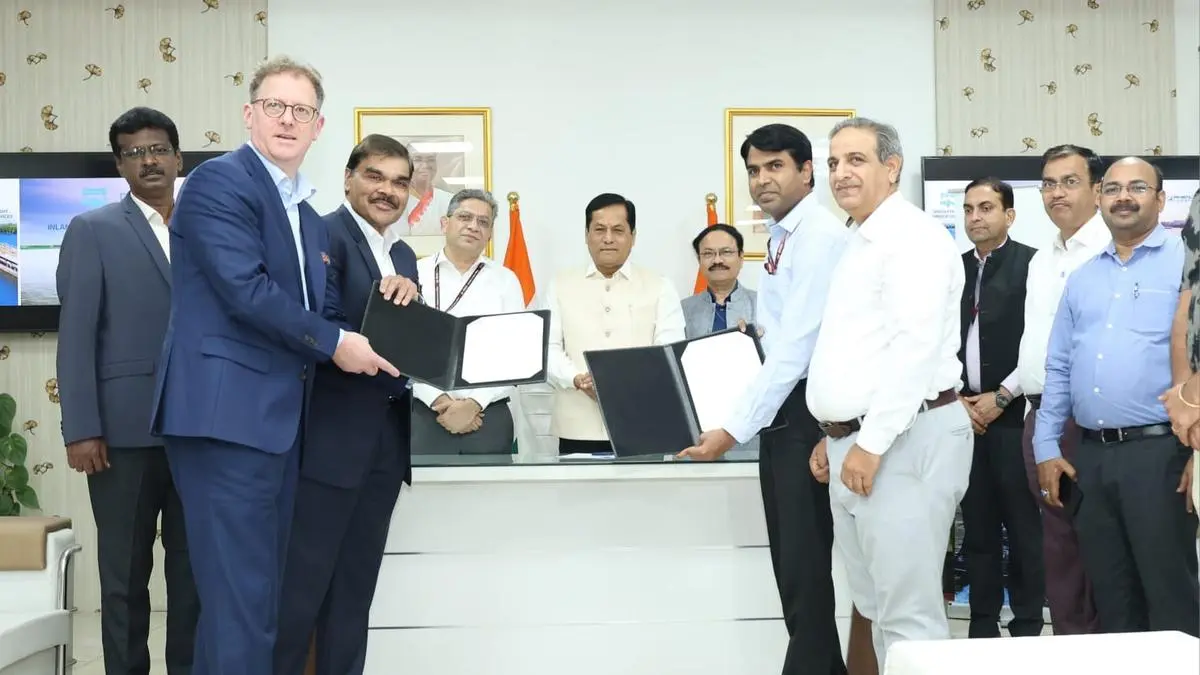
Rhenus, a leading logistics company, has recently signed a Memorandum of Understanding (MoU) with the Government of India to introduce 100 barges in a phase-wise manner in the national waterways. This move is set to revolutionize the transportation of goods and materials in the country and is a major step towards promoting inland waterways as a viable mode of transportation.
The MoU was signed in the presence of the Minister of Shipping, Road Transport and Highways, Mr. Nitin Gadkari, and other senior officials from both Rhenus and the government. The agreement was hailed as a significant milestone in the development of the national waterways and was seen as a testament to the government’s commitment towards promoting sustainable and efficient modes of transportation.
Under the MoU, Rhenus will introduce 100 barges in a phase-wise manner, with the first phase consisting of 20 barges. These barges will be equipped with state-of-the-art technology and will be used for the transportation of various goods and materials, including coal, steel, and agricultural produce. The remaining 80 barges will be introduced in subsequent phases, with the aim of covering all the major national waterways in the country.
The introduction of these barges is expected to bring about a significant reduction in transportation costs, as well as reduce the carbon footprint of the logistics industry. With the increasing concerns over air pollution and the rising cost of fuel, inland waterways have emerged as a sustainable and cost-effective alternative for transportation. The use of barges will also help decongest the roads and railways, which are currently the primary modes of transportation for goods and materials.
Moreover, the introduction of these barges will also create numerous employment opportunities for the local communities living along the national waterways. Rhenus has committed to hiring and training local residents to operate and maintain these barges, thus contributing to the socio-economic development of the region.
The MoU between Rhenus and the government is a result of the government’s ambitious plan to develop the national waterways as a major mode of transportation. The National Waterways Act, 2016, declared 111 rivers and canals as national waterways, with the aim of promoting their development and utilization for transportation. The government has also undertaken various initiatives to improve the infrastructure and connectivity of these waterways, including the development of terminals, jetties, and navigation aids.
The introduction of 100 barges by Rhenus is a significant step towards realizing the full potential of the national waterways. It is expected to boost the trade and commerce in the country, especially in the eastern and northeastern regions, which are largely dependent on the Brahmaputra and Ganga river systems. The use of barges will also help in the seamless movement of goods and materials between different states, thus promoting inter-state trade and commerce.
In addition to the transportation of goods and materials, the national waterways also have immense potential for passenger transportation. The government has already launched various passenger services on the national waterways, including luxury cruises and ferry services. With the introduction of 100 barges, the government aims to further improve the passenger transportation services, making it a popular and convenient mode of travel for tourists and locals alike.
In conclusion, the MoU between Rhenus and the government is a significant step towards promoting sustainable and efficient modes of transportation in the country. The introduction of 100 barges in the national waterways will not only reduce the transportation costs and carbon footprint but also create employment opportunities and boost trade and commerce. With the government’s continued efforts towards the development of the national waterways, it is expected to emerge as a major contributor to the country’s economic growth and development.