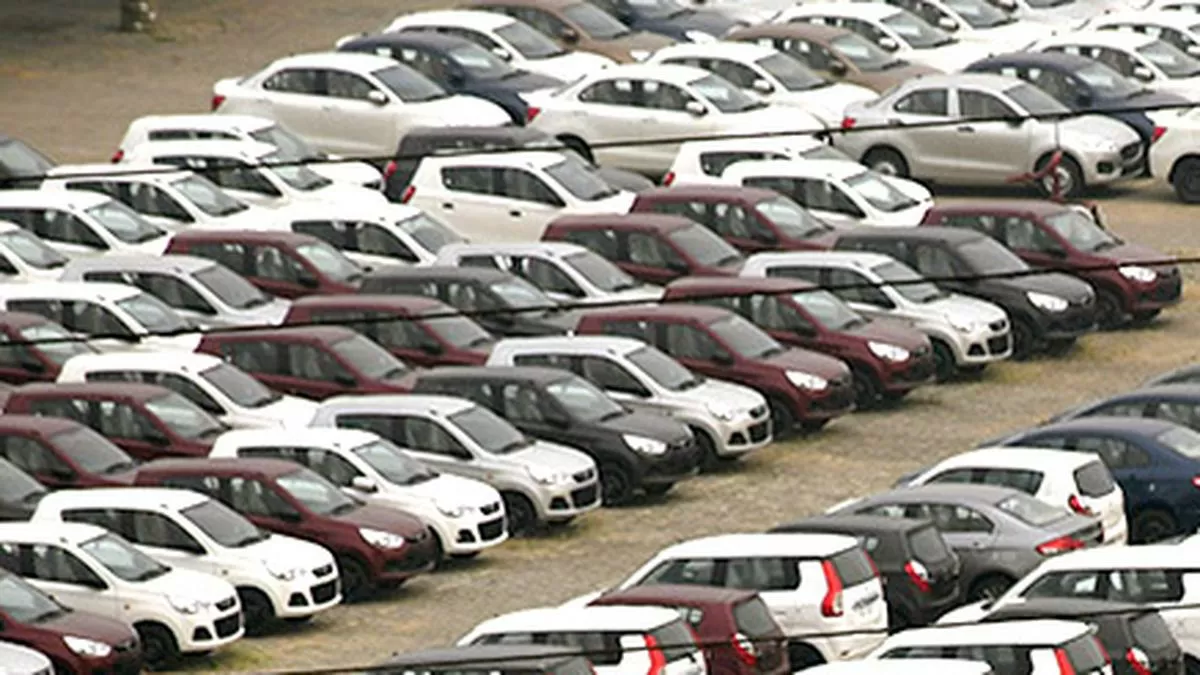
Strong rural demand, new launches, and festive cheer drive growth in passenger vehicles and two-wheelers, while CV segment dips by 1%.
The Indian automobile industry has witnessed a remarkable growth in the past few months, with the passenger vehicle and two-wheeler segments leading the way. The strong rural demand, coupled with the launch of new models and the festive season, has been the driving force behind this growth. However, the commercial vehicle segment has seen a slight dip of 1%, which can be attributed to various factors.
The passenger vehicle segment has shown a significant growth of 12% in the month of October, with a total of 3,09,955 units sold. This is a clear indication of the strong demand from the rural areas, which have been largely unaffected by the economic slowdown. The rural market has emerged as a key contributor to the overall growth of the automobile industry, with its share increasing from 30% to 40% in the past few years.
One of the major factors contributing to this growth is the launch of new models by various automobile companies. The festive season has always been a crucial time for the automobile industry, and this year was no different. Several new models were launched, offering a wide range of options for the consumers. This, coupled with attractive discounts and offers, has led to a surge in the sales of passenger vehicles and two-wheelers.
The two-wheeler segment has also witnessed a significant growth of 14% in the month of October, with a total of 20,53,497 units sold. This can be attributed to the increasing demand from the rural areas, where two-wheelers are the primary mode of transportation. The launch of new models and the festive season have also played a crucial role in boosting the sales of two-wheelers.
However, the commercial vehicle segment has seen a slight dip of 1% in the month of October, with a total of 77,394 units sold. This can be attributed to various factors such as the economic slowdown, increase in fuel prices, and the implementation of new axle load norms. The commercial vehicle segment is highly dependent on the overall economic growth of the country, and the current slowdown has affected its sales.
Despite the dip in the commercial vehicle segment, the overall growth of the Indian automobile industry is a positive sign. It not only reflects the strong demand from the rural areas but also showcases the resilience of the industry in the face of economic challenges. The launch of new models and the festive season have provided a much-needed boost to the industry, and it is expected to continue its growth trajectory in the coming months.
The growth in the passenger vehicle and two-wheeler segments is also a testament to the changing preferences of the Indian consumers. With the rise in disposable income and the increasing awareness about the latest technologies, consumers are now looking for more advanced and feature-rich vehicles. This has led to a shift towards premium and high-end models, which has further contributed to the growth of the industry.
The government’s focus on rural development and infrastructure has also played a crucial role in the growth of the automobile industry. The improvement in rural connectivity has made it easier for the companies to reach out to the rural consumers and cater to their needs. This, coupled with the government’s push towards electric vehicles, has created a positive environment for the automobile industry to thrive.
In conclusion, the strong rural demand, new launches, and festive cheer have been the driving force behind the growth of the passenger vehicle and two-wheeler segments in the Indian automobile industry. While the commercial vehicle segment has seen a slight dip, the overall growth of the industry is a positive sign and reflects the resilience of the industry. With the government’s support and the changing preferences of the consumers, the Indian automobile industry is poised for a bright future.