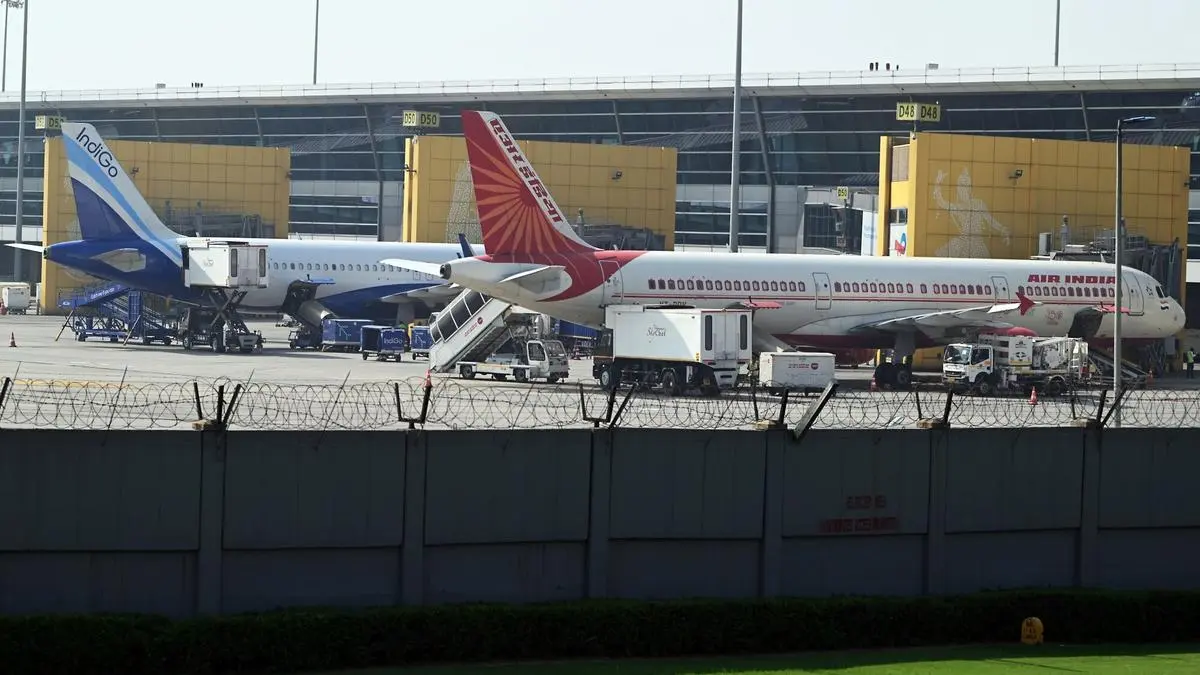
In a recent development, Pakistan has announced the closure of its airspace for all commercial flights. This news has sent shockwaves through the aviation industry, with many airlines scrambling to find alternate routes for their flights. Among the most impacted by this decision are India’s national carrier, Air India, and the country’s largest passenger airline, IndiGo.
The closure of the Pakistani airspace means that flights from India to the West, such as Europe and the USA, will have to take longer and more fuel-consuming routes. This will not only increase the flight time but also lead to a hike in ticket prices. For Air India and IndiGo, which have multiple flights passing through the affected airspace every day, this decision will severely affect their bottom line.
Air India, which operates 56 flights per week to destinations in Europe and the USA, will have to change its flight paths. This will result in an increase in flying time, leading to higher fuel costs and ultimately impacting their profitability. The airline’s operations will be disrupted, and it may also have to reduce its flight frequency, causing inconvenience to passengers.
Similarly, IndiGo, with its extensive international network to Bangkok, Dubai, Singapore, and other Asian destinations, will also be severely hit by the closure of Pakistan’s airspace. The airline operates over 300 flights per week, and a significant portion of these flights pass through the affected airspace. The closure will not only increase their operational costs but also lead to a potential loss of revenue.
The decision to close the airspace has come as a surprise to many in the aviation industry. It is a well-known fact that Pakistan’s airspace is one of the busiest in the world, with numerous flights passing through it every day. This airspace closure will not only affect flights passing through Pakistan but also those passing through other neighboring countries. It is a matter of great concern for all the airlines operating in this region.
However, amidst all the chaos and uncertainty, there is a silver lining. The closure of Pakistan’s airspace has presented an opportunity for Indian airlines to explore alternate routes and expand their operations. With the Indian government taking proactive steps to develop new routes and increase connectivity, airlines like Air India and IndiGo can tap into this potential and strengthen their presence in the international market.
India’s Minister for Civil Aviation, Suresh Prabhu, has assured that the government is working towards minimizing the impact of the airspace closure. Alternate routes through the Arabian Sea are being explored, and talks are underway with neighboring countries to use their airspace. These measures will not only help Indian airlines but also benefit other international carriers that use the Indian airspace.
Additionally, this situation can also lead to the development of new routes and increased connectivity between India and other countries. This will not only provide more options for travelers but also boost the growth of the aviation industry in India.
It is also worth mentioning that Air India and IndiGo, both being highly reputed and customer-centric airlines, have always strived to provide the best services to their passengers. Despite the challenges posed by the closure of Pakistan’s airspace, both these airlines have assured their commitment to ensuring a smooth and hassle-free travel experience for their customers.
In conclusion, while the decision to close Pakistan’s airspace will undoubtedly have an impact on the operations and profitability of Air India and IndiGo, it is not a roadblock for these airlines. They have the resilience to overcome this challenge and emerge even stronger. With the government’s support and the airline’s determination, this situation can be turned into an opportunity for growth and development. Let us stay positive and support our national carriers in their endeavors to serve us better.