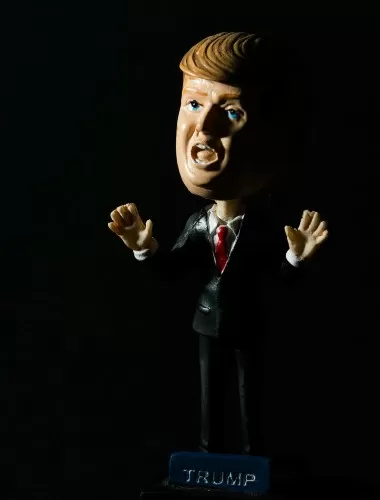
Donald Trump’s presidency has been marked by a series of controversial executive actions, many of which have sparked widespread debate and criticism. While most of these actions have focused on issues such as immigration, healthcare, and foreign policy, there is one area that has received surprisingly little attention – education and knowledge production.
According to sociologist Philip N. Cohen, Trump’s executive actions in the realm of education and research are not just short-term measures, but rather a deliberate effort to undermine scientific enquiry across all fields. In his article, “Does Trump’s ‘Common Sense’ Equal a War on Social Science?”, Cohen argues that these actions pose a serious threat to the future of social science and knowledge production in the United States.
One of the most significant actions taken by the Trump administration in this regard was the proposed budget cuts to federal agencies that fund scientific research. The proposed cuts to agencies such as the National Institutes of Health, the National Science Foundation, and the Environmental Protection Agency would have a devastating impact on the ability of researchers to conduct their work. This would not only affect the scientific community, but also have far-reaching consequences for society as a whole.
Moreover, the Trump administration has also taken steps to limit the use of scientific evidence in policymaking. This includes the removal of scientific data from government websites and the appointment of individuals with little to no scientific background to key positions in agencies responsible for overseeing scientific research. This blatant disregard for scientific evidence and expertise is a dangerous trend that could have serious implications for public policy and decision-making.
But perhaps the most alarming aspect of Trump’s war on social science is the attack on the very concept of truth and facts. The administration has repeatedly dismissed scientific evidence and data as “fake news” and has promoted alternative facts and conspiracy theories. This not only undermines the credibility of scientific research, but also erodes the foundation of a democratic society – the pursuit of truth and knowledge.
Cohen argues that these actions are not just a result of Trump’s ignorance or lack of understanding of the importance of scientific research. Rather, they are part of a deliberate strategy to discredit and undermine the work of social scientists who often produce findings that are at odds with the administration’s agenda. By attacking the validity and credibility of social science, the administration hopes to silence dissent and push their own agenda without any opposition.
The implications of Trump’s war on social science are far-reaching and could have a lasting impact on the future of education and knowledge production in the United States. The proposed budget cuts and attacks on scientific evidence and expertise not only threaten the progress of scientific research, but also hinder the ability of future generations to access and benefit from this knowledge.
It is therefore crucial for the scientific community and society as a whole to stand up against these actions and defend the importance of social science. As Cohen rightly points out, “the pursuit of knowledge and truth is not a partisan issue – it is a fundamental human endeavor.” We must not allow political agendas to dictate the direction of scientific research and the dissemination of knowledge.
In conclusion, Trump’s executive actions in the realm of education and knowledge production are not just short-term measures, but rather a calculated effort to undermine the very foundation of scientific enquiry. It is imperative that we recognize the gravity of this situation and take a stand to protect the integrity and value of social science. As a society, we cannot afford to let political agendas hinder the pursuit of knowledge and truth.