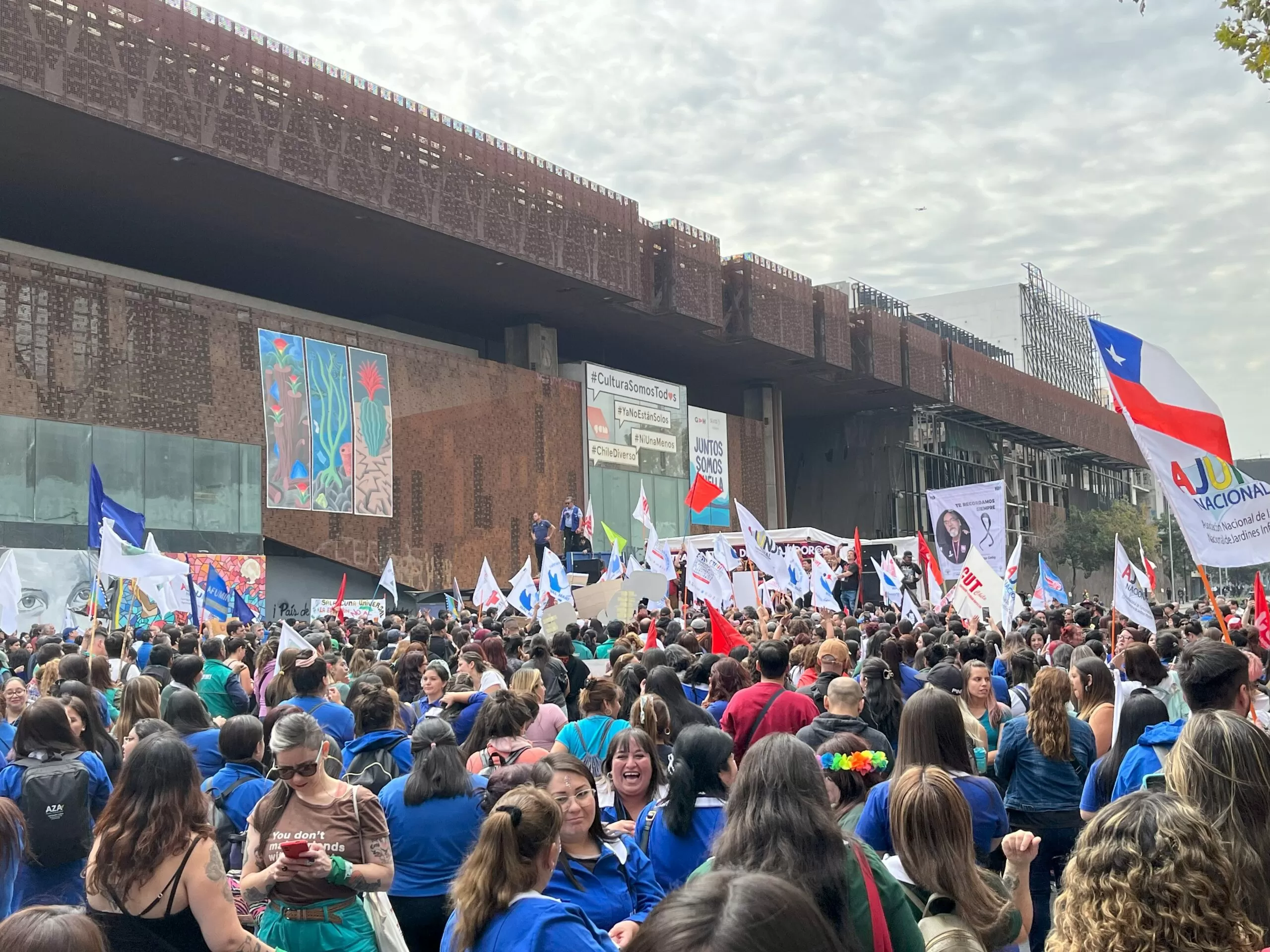
In this article, we, co-authors Pablo Pérez-Ahumada and Charo Astorga-Pinto, are excited to share with you the inspiration behind our latest research paper, “Why are union members more willing to strike and protest than non-union members? Evidence from Argentina and Chile.” Our study delves into the important topic of labor unions and their role in promoting social and political change in the Latin American context.
As researchers in the field of social science, we have always been fascinated by the influence of labor unions in shaping societies and economies. However, the lack of comprehensive studies examining the factors that drive union members to participate in collective action has been a gap in the literature. This motivated us to take a closer look at the issue and delve deeper into understanding the underlying reasons behind union members’ higher propensity for strikes and protests.
One of the key motivations behind our research was to shed light on the ongoing debate surrounding the effectiveness of labor unions in bringing about social change. Some argue that unions have lost their relevance in contemporary societies, while others believe they are still a powerful force for advocating workers’ rights. By examining data from Argentina and Chile, two countries with a long history of labor movements, we aimed to contribute to this debate and provide evidence for the impact of unions in driving collective action.
Our findings revealed that union members are indeed more willing to participate in strikes and protests compared to non-union members. This holds true even when controlling for factors such as age, gender, education, and employment type. We also found that union membership is positively associated with political participation, indicating a strong link between labor unions and political engagement.
So why are union members more willing to strike and protest? Our research suggests that the main drivers are a sense of collective identity and solidarity among union members, as well as the perceived effectiveness of strikes and protests in achieving their goals. By being part of a union, workers feel a sense of belonging and camaraderie, which in turn, motivates them to take collective action to promote their shared interests.
Moreover, union members also believe that strikes and protests are effective tools for bringing about change. This perception is supported by historical evidence of successful union-led movements in Latin America, such as the famous “Cordobazo” in Argentina and the “Paro Nacional” in Chile. These events have not only resulted in improved working conditions for union members but also brought about broader societal and political changes.
Our study also highlights the role of unions in promoting democratic values and social justice. In both Argentina and Chile, labor unions have a strong tradition of fighting for workers’ rights and challenging authoritarian regimes. By actively participating in political and social movements, union members contribute to the consolidation of democracy and the advancement of social justice in their countries.
We believe that our research has important implications for policymakers and labor activists in Latin America and beyond. By recognizing the important role of unions in promoting social and political change, governments can work towards creating a conducive environment for union activities and protecting workers’ rights. Our findings also emphasize the need for unions to continue evolving and adapting to the changing socio-political landscape in order to remain relevant and effective in advocating for workers’ rights.
In conclusion, we would like to emphasize that our research is not just an academic exercise but a reflection of our deep commitment to understanding and promoting social justice. As social scientists, we strongly believe in the power of research to bring about positive change in society. We hope that our study on labor unions in Argentina and Chile will spark further discussions and research on this important topic and contribute to the ongoing efforts towards creating a more just and equitable world.
The post Why Are Union Members More Willing to Strike and Protest than Non-Union Members? Evidence from Argentina and Chile appeared first on Social Science Space.