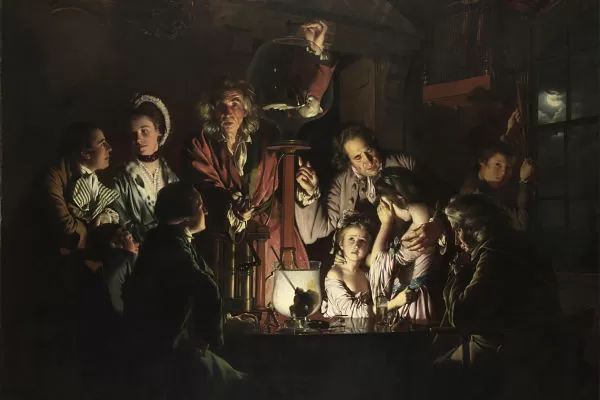
Science is often seen as a separate world, one that is cool, rational, and untouched by the influence of persuasion or performance. In this view, scientists are simply discoverers of objective truths, immune to the biases and subjectivity of the rest of society. However, this perception is far from the truth. Science, like any other field, is influenced by human nature and the dynamics of the society in which it exists. And as such, scientists must keep in mind that it is called the ‘marketplace of ideas’ for a reason.
The term ‘marketplace of ideas’ was first coined by Justice Oliver Wendell Holmes Jr. in his dissenting opinion in the 1919 case of Abrams v. United States. He argued that the best way to arrive at the truth is through the free exchange of ideas, where all ideas are given a fair chance to be heard and evaluated. This concept is at the heart of the scientific process, where theories and hypotheses are constantly tested and challenged in order to arrive at the most accurate understanding of the world around us.
However, in recent years, there has been a growing concern about the state of the marketplace of ideas in science. With the rise of fake news, misinformation, and the politicization of scientific issues, the integrity of the scientific process has been called into question. Scientists are facing increasing pressure to produce results that align with certain agendas, rather than pursuing the truth. This has led to a decline in public trust in science and a rise in skepticism towards scientific findings.
In order to combat this trend, scientists must remember that the marketplace of ideas is not a static entity, but a constantly evolving one. It is shaped by the people who participate in it, and as such, scientists have a responsibility to actively engage in the marketplace and uphold its principles. This means being open to criticism and being willing to revise or even discard theories that do not hold up to scrutiny. It also means being transparent about the methods and data used in research, so that others can replicate and verify the results.
Moreover, scientists must also be aware of their own biases and the potential for their work to be influenced by external factors. This is especially important in fields such as medicine and psychology, where the results of research can have a direct impact on people’s lives. By acknowledging and addressing these biases, scientists can ensure that their work remains objective and free from external influences.
In addition, scientists must also actively engage with the public and communicate their findings in a way that is accessible and understandable. This not only helps to bridge the gap between the scientific community and the general public, but also allows for a more informed and educated society. By fostering a culture of open dialogue and collaboration, scientists can help to strengthen the marketplace of ideas and promote the pursuit of truth.
It is also important for scientists to remember that the marketplace of ideas is not limited to academia or research institutions. It extends to the media, government, and other institutions that shape public opinion and policy. As such, scientists must be willing to engage with these entities and advocate for the importance of evidence-based decision making. By actively participating in the larger societal discourse, scientists can help to ensure that the marketplace of ideas remains a place for the free exchange of ideas and the pursuit of truth.
In conclusion, the marketplace of ideas is a crucial aspect of the scientific process, and scientists must keep in mind that it is called so for a reason. It is a dynamic and ever-evolving entity that requires active participation and engagement in order to thrive. By upholding the principles of open dialogue, transparency, and objectivity, scientists can help to strengthen the marketplace of ideas and promote the pursuit of truth. Only then can we truly harness the power of science to better understand our world and make informed decisions for the betterment of society.