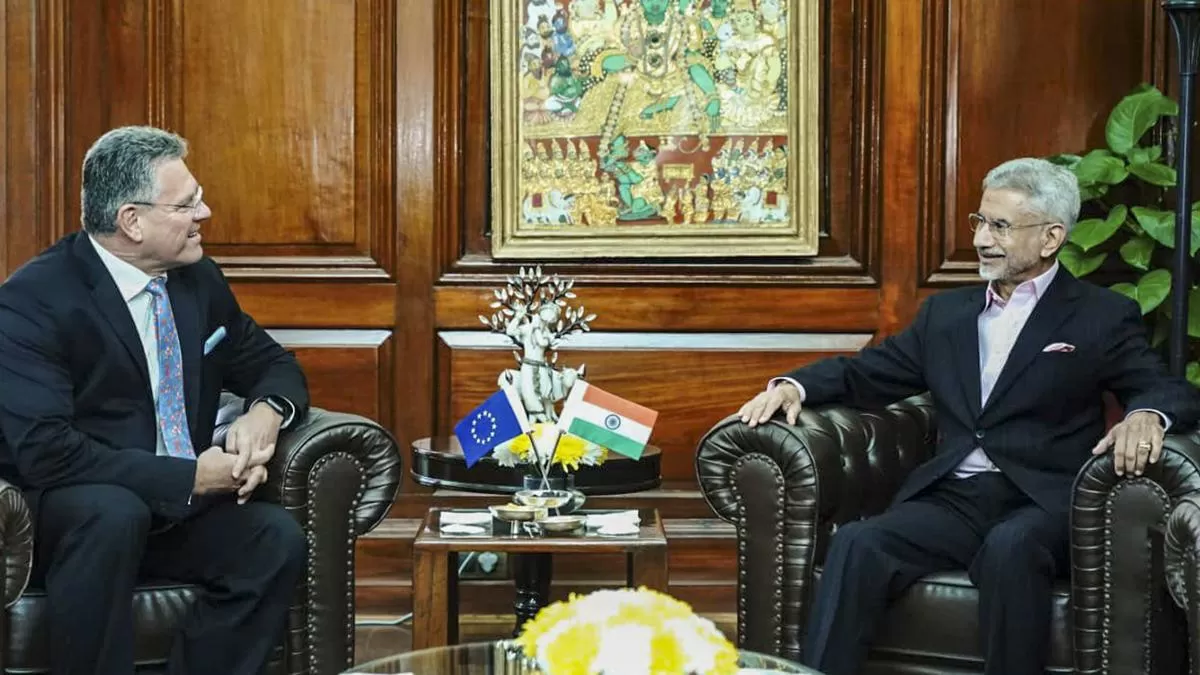
Both India and the European Union (EU) are determined to reach a significant milestone in their bilateral trade relations by concluding trade talks by the end of this year. This move is seen as a major step towards strengthening economic ties between the two regional powers.
The EU and India have been engaged in negotiations for a free trade agreement (FTA) since 2007. However, the talks have been marred by various challenges, including differences on issues such as tariff reduction, intellectual property rights, and market access. Despite these hurdles, both parties have remained committed to finding a mutually beneficial solution.
Recently, there has been renewed enthusiasm on both sides to push for the conclusion of the trade talks. In a virtual summit held in July 2020, Indian Prime Minister Narendra Modi and the leaders of the EU reiterated their commitment to a comprehensive and balanced FTA. They also agreed to intensify negotiations to achieve an early conclusion of the agreement.
The potential benefits of a trade deal between India and the EU are enormous. The EU is India’s largest trading partner, accounting for about 11% of its total trade. On the other hand, India is the EU’s ninth-largest trading partner, with the two-way trade reaching over 100 billion euros in 2019. A successful FTA could further boost these numbers and open up new avenues for trade and investment.
One of the main objectives of the FTA is to eliminate tariffs on goods and services traded between the two economies. This would not only reduce the cost of doing business but also provide a level playing field for both Indian and EU companies. It would also make European products more affordable for Indian consumers, potentially increasing their demand and creating more jobs in both regions.
Another crucial aspect of the FTA is the protection of intellectual property rights (IPR). India has made significant progress in strengthening its IPR laws and regulations in recent years. A trade deal with the EU would further enhance this framework, providing a secure environment for companies to invest in India. This, in turn, could attract more foreign investments and promote innovation and technology transfer.
Moreover, the FTA would also facilitate market access for goods and services, making it easier for companies to expand their businesses in both regions. This would be particularly beneficial for small and medium enterprises (SMEs) in India, as they would have increased access to the EU market, which is known for its high consumer spending power.
Apart from economic benefits, a trade deal between India and the EU would also have strategic implications. It would strengthen the geopolitical ties between the two regions and provide a counterbalance to China’s growing influence in the global market. Additionally, it could also pave the way for further cooperation in areas such as climate change, security, and digital trade.
There is no denying that the ongoing COVID-19 pandemic has posed significant challenges for the global economy. However, both India and the EU have shown resilience and determination to overcome these challenges and push for the conclusion of the FTA by the end of this year. The pandemic has also highlighted the importance of diversifying supply chains and strengthening trade relations between regions, making the FTA all the more crucial for both parties.
In conclusion, the renewed determination of India and the EU to conclude trade talks by the end of this year is a positive development for both regions. A successful FTA would not only boost economic growth and create jobs but also strengthen strategic ties and promote mutual cooperation. It is a step in the right direction towards a more interconnected and prosperous world.