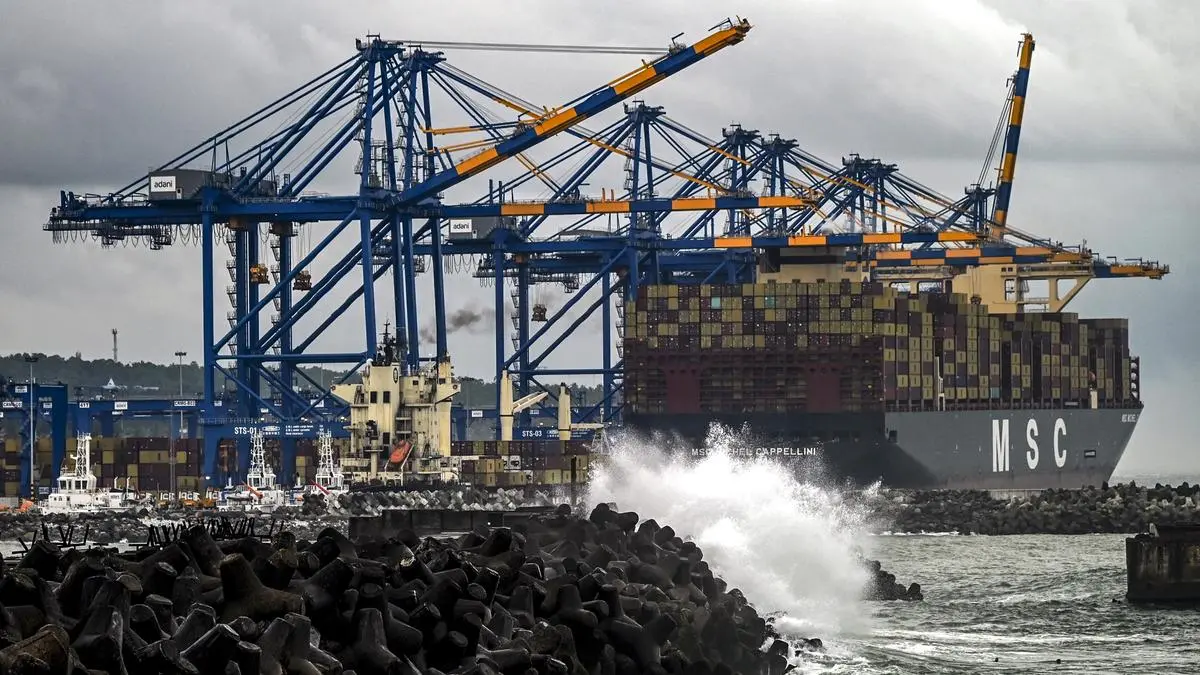
The Vizhinjam Port, located in the southern state of Kerala, is poised to become a major player in the global transshipment business. With its strategic location and state-of-the-art facilities, this port has the potential to revolutionize the way goods are transported across the world. Once the Vizhinjam Port reaches its full capacity, it is expected to generate substantial consumer surplus in terms of savings in ship and navigation costs. This will not only benefit the businesses involved in the transshipment trade, but also have a positive impact on the economy as a whole.
The Vizhinjam Port, which is being developed by the Adani Group, is strategically located on the international shipping route between Europe and East Asia. This makes it an ideal transshipment hub, as it provides easy access to major markets in Europe, Africa, and the Middle East. With its deep draft and modern infrastructure, the port is capable of handling the largest container vessels, thus reducing the need for multiple transshipments and saving valuable time and resources.
One of the main advantages of the Vizhinjam Port is its cost-effectiveness. The port has been designed to handle large volumes of cargo at a lower cost compared to other ports in the region. This is due to its efficient layout, advanced technology, and streamlined processes. As a result, shipping lines and businesses can save significant amounts on ship and navigation costs. This savings will ultimately be passed on to the consumers, resulting in a substantial consumer surplus.
The savings in ship and navigation costs will have a ripple effect on the entire transshipment business. It will make Indian ports more competitive in the global market and attract more shipping lines to use the Vizhinjam Port as their transshipment hub. This will not only increase the port’s revenue, but also create more job opportunities and boost the local economy. The port is expected to handle around 4.1 million TEUs (twenty-foot equivalent units) of containers once it reaches its full capacity, which will have a significant impact on the economy of Kerala and the country as a whole.
Moreover, the Vizhinjam Port is equipped with modern technology and facilities that will ensure a smooth and efficient transshipment process. The port has a dedicated container terminal, a state-of-the-art container yard, and advanced cargo handling equipment. This will not only speed up the transshipment process, but also ensure the safety and security of the cargo. With the implementation of advanced technology, the port will also be able to track and monitor the movement of containers, making it more efficient and reliable.
The Vizhinjam Port is not just a game-changer for the transshipment business, but also for the environment. The port has been designed to be eco-friendly, with a focus on reducing carbon emissions and promoting sustainable practices. It has a dedicated green belt and a rainwater harvesting system, which will help in conserving natural resources. The port also has plans to use renewable energy sources, such as solar and wind power, to reduce its carbon footprint. This commitment towards sustainability will not only benefit the environment, but also enhance the port’s reputation as a responsible and ethical business entity.
In conclusion, the Vizhinjam Port has the potential to transform the transshipment business in India and become a major player in the global market. With its strategic location, cost-effectiveness, modern facilities, and commitment towards sustainability, the port is set to generate substantial consumer surplus in terms of savings in ship and navigation costs. This will not only benefit the businesses involved in the transshipment trade, but also have a positive impact on the economy and the environment. The Vizhinjam Port is truly a game-changer and a shining example of India’s progress and potential in the global trade market.