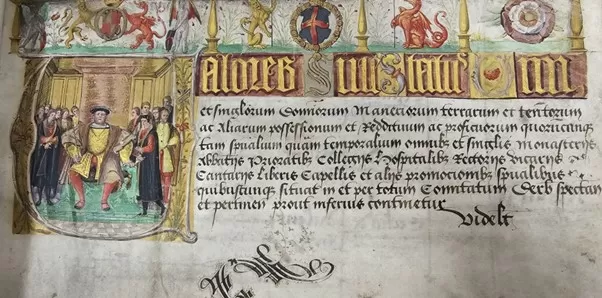
The National Archives is a treasure trove of historical documents that provide us with valuable insights into the past. One such document that has recently been made accessible by the National Archives is the financial survey of the Church ordered by King Henry VIII after his break with Rome in 1535. This survey, conducted by his inspectors, gives us a glimpse into the wealth and power of the Church during this tumultuous time in English history.
In 1534, King Henry VIII declared himself the head of the Church of England, breaking away from the authority of the Pope in Rome. This was a significant event that had far-reaching consequences, not only for the religious landscape of England but also for its financial state. The Church, which had been a dominant force in England for centuries, was now under the control of the King and his government. As a result, a financial survey was ordered to assess the wealth and assets of the Church.
The survey, which was completed in 1535, was a massive undertaking. Henry VIII’s inspectors travelled the length and breadth of England and Wales, counting and recording the wealth of the Church. The results of this survey provide us with a detailed picture of the Church’s financial status at the time. It is estimated that there were around 8,000 parish churches, 650 monasteries, 22 cathedrals, and numerous chapels, chantries, colleges, schools, hospitals, and poor houses in England and Wales during this period.
The survey gives us valuable insights into the wealth of the Church and its impact on society. It was found that the Church owned vast amounts of land, making it one of the largest landowners in the country. This land was a significant source of income for the Church, as it was often rented out or used for farming. The Church also had a considerable amount of money in its possession, in the form of gold, silver, and other valuable assets.
The survey also sheds light on the lavish lifestyle of the Church officials. It was found that they lived in luxury, with extravagant furnishings and possessions. This was in stark contrast to the poverty and hardship faced by many ordinary people during this time. The survey also revealed that the Church was exempt from paying taxes, which further added to its wealth and power.
The financial survey of the Church ordered by Henry VIII is a crucial document that provides us with a deeper understanding of the religious and economic landscape of England during this period. It also highlights the immense power and influence of the Church, which played a significant role in the lives of people at the time.
The National Archives has made this document accessible to the public, allowing us to delve into the past and gain a better understanding of our history. It is a commendable effort by the National Archives to preserve and share such valuable historical documents with the world. By making this survey available, the National Archives is not only helping us to learn about the past but also encouraging us to reflect on the present and the future.
In conclusion, the financial survey of the Church ordered by Henry VIII in 1535 is a significant historical document that provides us with a glimpse into the wealth and power of the Church during a pivotal time in English history. The National Archives’ efforts to make this survey accessible to the public is commendable and will undoubtedly contribute to our understanding of the past. It is a reminder of the importance of preserving and sharing our history for future generations to come.