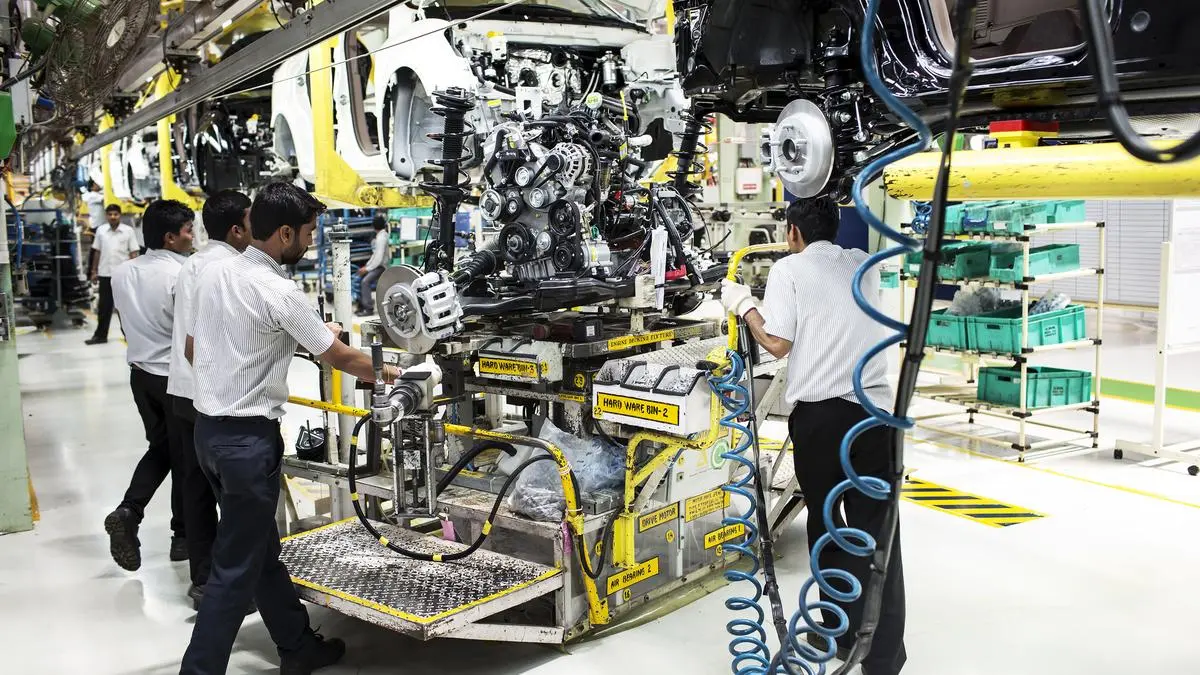
Niti Aayog, the premier policy think tank of India, has recently highlighted the growth potential of the country’s auto component sector. According to Niti Aayog’s projections, the sector is poised for significant growth by 2030, with plans to increase production from $70 billion in FY23 to $120 billion by FY30. This is indeed a positive development for India’s automotive industry and the economy as a whole.
The auto component sector, which is an integral part of the automotive industry, has been a major contributor to India’s economic growth over the years. It comprises of a wide range of products such as engine parts, electrical and electronic components, transmission and steering parts, and body and chassis parts, among others. These components are essential for the production of vehicles, both for domestic consumption and exports.
India’s auto component sector has shown remarkable growth in the past decade, with an annual growth rate of 8-10%. This growth has been driven by factors like increasing demand for automobiles, favorable government policies, and the country’s skilled workforce. The sector has also been able to attract significant foreign investment, which has further propelled its growth.
With Niti Aayog’s projection of a production increase from $70 billion to $120 billion by FY30, the sector is expected to grow at a much faster pace in the coming years. This is a clear indication of the confidence of policymakers in the sector’s potential and their commitment towards its growth. This growth is also in line with the government’s vision of making India a global manufacturing hub.
One of the key drivers of this growth will be the increasing demand for automobiles in the country. India is currently the world’s fourth-largest automobile market, and this demand is expected to continue to grow in the coming years. The rise of the middle class, increasing disposable income, and changing lifestyles are some of the factors contributing to this demand. As a result, the demand for auto components will also increase, creating a favorable environment for the sector’s growth.
The government’s policies and initiatives have also played a crucial role in propelling the growth of the auto component sector. The ‘Make in India’ campaign, which aims to boost domestic manufacturing and attract foreign investment, has been a game-changer for the sector. The introduction of the Goods and Services Tax (GST) has also simplified the tax structure, making it easier for companies to do business. The implementation of the National Automotive Policy in 2018 has also provided a roadmap for the sector’s growth and development.
The sector’s growth will also be fueled by the country’s skilled workforce, which has been a major advantage for Indian companies. India has a large pool of engineering graduates and technicians, who are well-versed in the latest technologies and are capable of meeting the demands of the industry. The government’s focus on skill development through initiatives like the National Skill Development Mission has further enhanced the workforce’s capabilities.
The growth of the auto component sector will have a ripple effect on the entire automotive industry, leading to job creation and economic growth. It is estimated that the sector will create around 50 lakh new jobs by FY30. This will not only provide employment opportunities but also contribute to the country’s overall economic development.
Moreover, the growth of the auto component sector will also have a positive impact on the country’s exports. India has emerged as a major hub for auto component exports, with a presence in over 160 countries. The sector’s growth will further strengthen the country’s position in the global market, making it a preferred destination for auto component sourcing.
In conclusion, Niti Aayog’s projection of the auto component sector’s growth is a testament to the sector’s potential and its crucial role in the country’s economic growth. With favorable government policies, a skilled workforce, and increasing demand, the sector is well-positioned to achieve its production target of $120 billion by FY30. This growth will not only benefit the industry but also contribute to the overall development of the nation. It is indeed an exciting time for the Indian auto component sector, and the future looks bright.