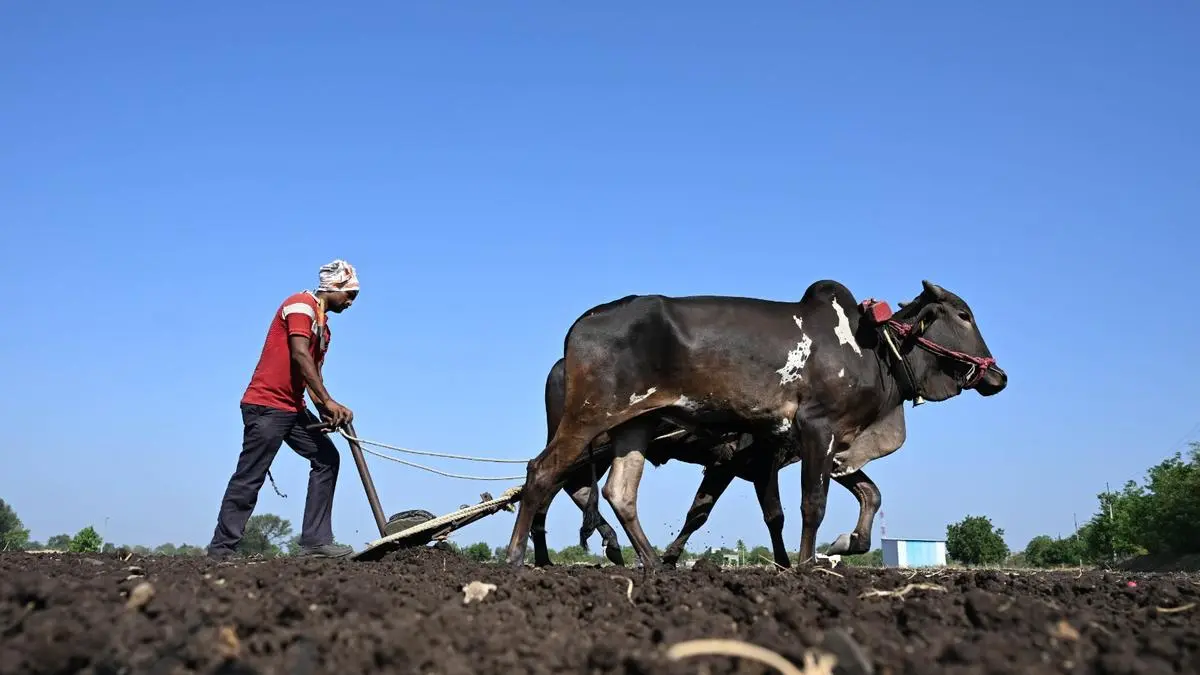
As the controversy over Aurangzeb’s tomb in Khultabad, Chhatrapati Sambhajinagar district intensifies, the farming crisis unfolding in the region remains largely ignored. While the debate over the Mughal emperor’s legacy and the ownership of his tomb rages on, the plight of the farmers in this region continues to worsen. It is time to shift our focus from the past to the present and address the pressing issue of the farming crisis in Khultabad.
The district of Chhatrapati Sambhajinagar, formerly known as Aurangabad, is known for its rich history and cultural heritage. It is home to several historical monuments, including the famous Ajanta and Ellora caves. However, amidst all the grandeur and glory, lies a grim reality – the farming crisis. The once fertile land of Khultabad is now facing a severe drought, leaving the farmers struggling to make ends meet.
The farming crisis in Khultabad is not a recent phenomenon. It has been brewing for years, but unfortunately, it has not received the attention it deserves. The lack of rainfall, coupled with the depletion of groundwater, has led to a sharp decline in agricultural productivity. The farmers are facing immense hardships as their crops fail, and they are unable to repay their loans. The situation has become so dire that many farmers have been forced to sell their land and migrate to cities in search of livelihood.
One of the major reasons for the farming crisis in Khultabad is the neglect of the agricultural sector by the government. The policies and schemes meant for the welfare of farmers have not been implemented effectively. The lack of proper irrigation facilities and inadequate support from the government has only added to the woes of the farmers. The recent decision to convert the land around Aurangzeb’s tomb into a memorial has also raised concerns among the farming community. They fear that this move will further reduce the availability of land for farming and aggravate their already dire situation.
The farming crisis in Khultabad has not only affected the livelihood of farmers but has also taken a toll on the overall economy of the region. Agriculture is the primary source of income for the majority of the population in Khultabad, and the decline in agricultural productivity has had a ripple effect on other sectors. The lack of employment opportunities has led to a rise in poverty and migration, further exacerbating the situation.
It is high time that the government takes immediate and concrete steps to address the farming crisis in Khultabad. The first and foremost step should be to provide adequate irrigation facilities and ensure the availability of water for farming. The government should also introduce new and innovative farming techniques to improve productivity and reduce the dependence on rainfall. The implementation of effective crop insurance schemes and loan waivers can provide much-needed relief to the struggling farmers.
Apart from government intervention, it is also essential for the society as a whole to come forward and support the farmers in Khultabad. NGOs and other organizations can play a crucial role in providing assistance to the farmers and creating awareness about the farming crisis. It is also the responsibility of the citizens to support the local farmers by buying their produce and promoting sustainable farming practices.
In conclusion, while the controversy over Aurangzeb’s tomb in Khultabad continues to grab headlines, the farming crisis in the region remains a pressing issue that needs urgent attention. It is time to shift our focus from the past to the present and work towards finding a solution to the farming crisis. Let us come together and support the farmers in Khultabad, who have been the backbone of our society for generations. Only then can we truly honor the legacy of our ancestors and build a better future for the coming generations.