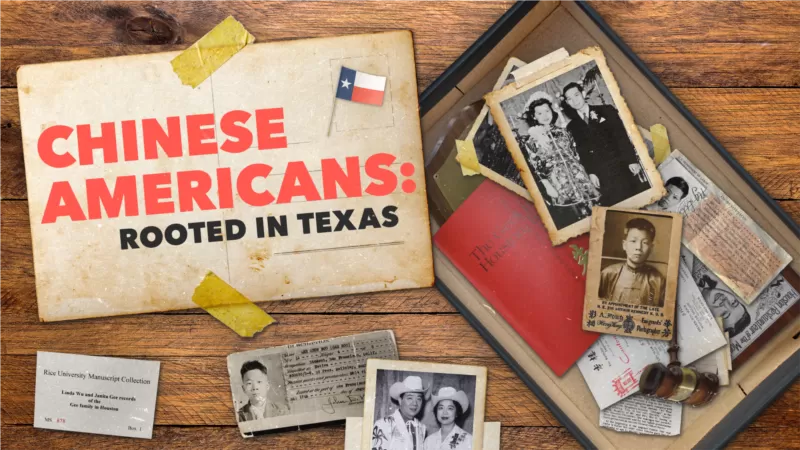
The diverse culture and rich history of the state of Texas is no secret. From the cowboys of the wild west to the vibrant Hispanic community, the Lone Star State has always been a melting pot of different cultures and ethnicities. And one of the biggest and most significant communities in Texas is the Asian American population. According to the U.S. census, Texas is home to the third-largest Asian American population in the United States, with Chinese Americans making up the largest group. These Chinese Americans have a long and intertwined history with America, one that may not be as well known as their counterparts in California or New York City, but is just as important.
Rice University’s Houston Asian American Archive (HAAA) is playing a crucial role in keeping the stories of these Chinese Americans alive and sharing them with new generations. Founded in 2009, the archive now contains oral histories of over 500 people, providing a window into the past and preserving a crucial part of American history. “Oral history gives you a sense of immediacy and maybe more informality. And it’s also unfiltered,” says Anne Chao, HAAA co-founder and program manager. In addition to oral histories, the archive also preserves memorabilia and artifacts from Asian Americans in Houston, a city known for its oil and gas industry and for being home to NASA’s Johnson Space Center.
One prominent figure in the Chinese American community in 1960s and ’70s Houston was Albert Gee. He was considered the unofficial mayor of the Chinese community and even appeared in the society pages of local newspapers with Hollywood celebrities. Gee’s story is just one of many that the HAAA is working to preserve. Born in Detroit, Michigan, in 1920, Gee and his family moved to New Orleans, where they operated a laundry business. After his father’s death in 1927, Gee’s mother, who did not speak English, took her children back to their home in China in hopes that they would return to the U.S. one by one. And that’s exactly what Gee did. “Albert found himself only around 11 years old, coming back to the United States,” says his daughter Linda Wu. “He was just working – working and trying to send money back to his mother.” With the help of friends and relatives, Gee eventually ended up in Houston where he opened grocery stores and restaurants, which became a favorite spot for Hollywood celebrities to visit during their stay in the city.
Beyond their success and contributions to the city’s economy, Chinese Americans in Houston have always held onto their culture and heritage. Jane Eng, the child of Chinese immigrants, was born and raised in Texas and her daughter, Linda Wu, recalls her parents always helping newcomers and newcomers becoming a part of their family. “I always remember different people coming to live with us at the grocery store, family members who would start their roots here,” says Wu.
By assisting newcomers, the established Chinese Americans helped fuel the growth of the Gee family surname in Houston. However, not all the Gees in Houston were related. Stories about some of the city’s Gees can be found in the HAAA database and in the 1998 anthology “The Gees in Houston, Texas.” Rogene Gee Calvert, who contributed stories about her father, David Gee, to the anthology, says that the Gee family came from about three to four villages in China. David Gee, for instance, arrived in the U.S. in the late 1920s during the Chinese Exclusion Act, which allowed Chinese merchants, diplomats, and students into the country, but banned laborers. He was only 17 when he arrived, but his passport indicated he was four years younger, making him a “paper son” as he was known – a term used for those who bought false papers to enter the country. “Paper sons and daughters are the names given to people who buy false papers,” says Casey Dexter-Lee, an educator at Angel Island State Park in San Francisco Bay. After arriving in the U.S., David Gee was detained at the Angel Island Immigration Station for almost a year before being allowed to stay. He eventually settled in Houston, where he opened a grocery store and raised a family.
Life was not easy for Chinese Americans during the Jim Crow era, as racial segregation was legal in Texas and Southern states. However, unlike other Southern states, Houston had a more equitable application of these laws. “Even though Houston also was