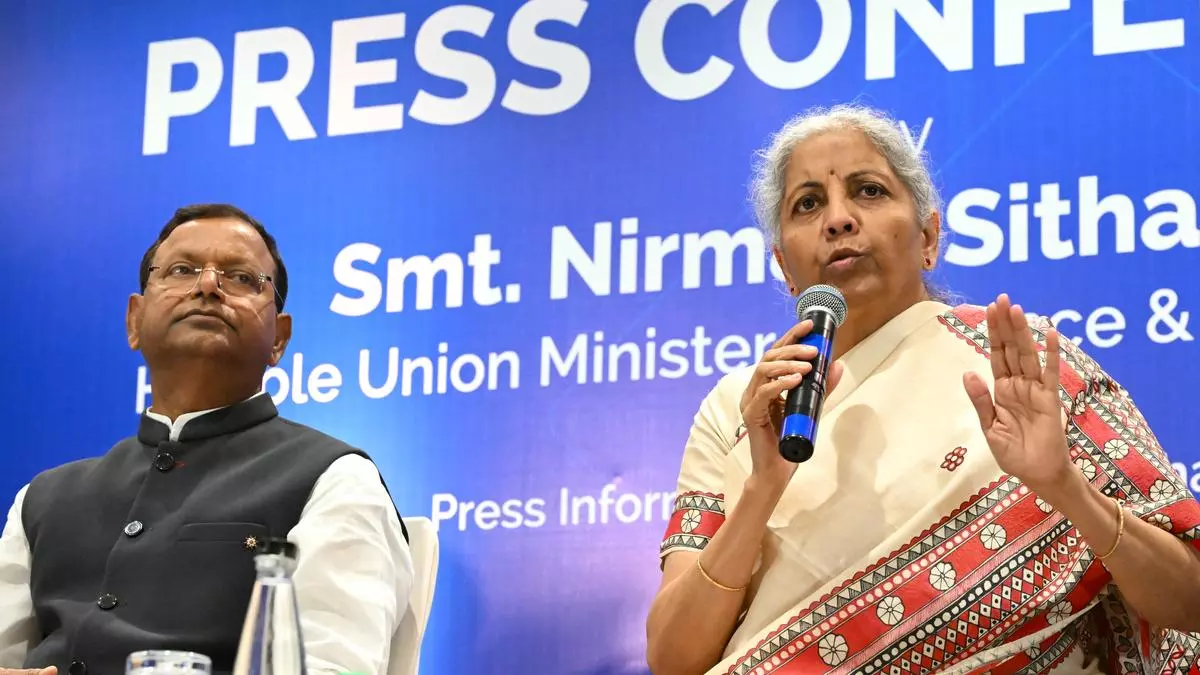
In a recent statement, India’s Finance Minister Nirmala Sitharaman has defended the use of tariffs as a legitimate tool for trade and has assured that they are in compliance with the World Trade Organization (WTO) norms. This comes amidst the ongoing trade tensions between major economies and the increasing use of tariffs as a means to protect domestic industries.
Sitharaman’s statement comes at a crucial time when the global trade scenario is facing uncertainty due to the ongoing trade war between the United States and China. The use of tariffs by the US has sparked a debate on the effectiveness and legitimacy of such measures. However, Sitharaman has made it clear that tariffs are a legitimate tool and are in accordance with the rules set by the WTO.
The Finance Minister emphasized that tariffs are not a new concept and have been used by countries for decades to protect their domestic industries. She also pointed out that India has been a member of the WTO since its inception and has always followed the rules and regulations set by the organization. Therefore, the use of tariffs by India should not be seen as a violation of any international trade norms.
Sitharaman also highlighted the fact that tariffs are not the only tool used by India to promote its domestic industries. The country has also implemented various other measures such as anti-dumping duties, safeguard duties, and countervailing duties to protect its industries from unfair trade practices. These measures are in line with the WTO’s rules and are used by many other countries as well.
The Finance Minister also addressed concerns about the impact of tariffs on consumers. She stated that the government is aware of the potential impact on prices and is taking necessary steps to mitigate it. She also assured that the government is constantly monitoring the situation and will make necessary adjustments if needed.
Sitharaman’s statement has been welcomed by the Indian industry, which has been facing tough competition from cheap imports. The use of tariffs has provided a level playing field for domestic industries and has helped them to compete with foreign players. This has also led to the growth of domestic industries and has created job opportunities for the Indian workforce.
Moreover, the use of tariffs has also helped in reducing the trade deficit of the country. India’s trade deficit has been a cause of concern for the government, and the use of tariffs has helped in narrowing the gap. This has also contributed to the overall growth of the Indian economy.
It is important to note that the use of tariffs is not a one-sided decision. It is a result of careful consideration and analysis of the impact on both domestic and international trade. The government has also been engaging in discussions with other countries to address any concerns and find a mutually beneficial solution.
In conclusion, Sitharaman’s statement reaffirms India’s commitment to fair and legitimate trade practices. The use of tariffs is a necessary tool to protect domestic industries and ensure a level playing field for all. The government’s actions are in line with the WTO’s rules and are aimed at promoting the growth of the Indian economy. With the ongoing trade tensions, it is crucial for countries to work together and find solutions that benefit all parties involved. India’s stance on tariffs is a step in the right direction towards achieving this goal.